
Commercial EV Charger Costs in Cardiff: A Budgeting Guide for Businesses

- Commercial EV charger costs depend on equipment, electrical capacity, installation complexity and the number of charge points required.
- A professional site survey helps identify electrical upgrades, groundwork and infrastructure costs before installation begins.
- Smart load management can reduce operational complexity and may help avoid unnecessary electrical upgrades.
- Planning for future expansion during the first installation phase can reduce long-term costs and disruption.
- Businesses should compare lifetime value, reliability and scalability rather than selecting chargers based only on the lowest initial price.
Learn what affects commercial EV charger costs in Cardiff, including equipment, installation, electrical upgrades, groundworks, smart charging and future expansion.
Why More Cardiff Businesses Are Investing in EV Charging
Electric vehicle adoption continues to grow across the UK, encouraging more organisations to introduce workplace, destination and fleet charging. Businesses are also responding to sustainability goals, changing customer expectations and the growing use of electric company vehicles.
For Cardiff businesses, commercial EV charging is increasingly viewed as practical infrastructure that supports day-to-day operations while helping future-proof commercial premises.
What Determines the Cost of a Commercial EV Charging Project?
Commercial EV charging costs vary because each site has different electrical, operational and installation requirements. The overall budget depends on factors such as the number of chargers, charging power, existing electrical capacity, cable routes and smart management requirements.
Understanding these cost factors before requesting quotations helps businesses prepare more realistic budgets and reduces the likelihood of unexpected expenses during installation.
Number of Charge Points
The number of charge points required has a direct impact on equipment, cabling, labour and infrastructure costs. A small workplace installation with two chargers will usually cost less than a retail or commercial development requiring multiple charging bays.
Larger projects may benefit from economies of scale, especially where groundwork, electrical upgrades and cable installation can be completed during the same phase.
Charger Power and Specification
Commercial chargers are available with different charging outputs and smart features. Lower-powered AC chargers are often suitable for workplaces, hotels and long-stay parking where vehicles remain connected for several hours.
Higher-powered charging equipment generally requires greater electrical capacity and more complex installation work. Matching charger output to real usage patterns is often more cost-effective than selecting the highest available charging speed.
Existing Electrical Infrastructure
The site's existing electrical capacity is one of the most important cost variables. Older commercial properties may require distribution board upgrades, additional cabling or improvements to the incoming electricity supply.
Newer developments may already have spare capacity available, which can reduce installation complexity. A professional site survey helps identify these requirements before the project begins.
Civil Engineering and Groundworks
Some commercial installations require only wall-mounted chargers and short cable runs, while others involve extensive work across car parks or external areas.
Trenching, protective ducting, mounting posts, foundations, line marking, signage, protective bollards and cable management can represent a significant part of the total project budget.
The Value of Smart Commercial Charging
Smart commercial charging systems allow businesses to monitor usage, control user access, allocate charging permissions, review electricity consumption and manage multiple chargers from a central platform.
Although smart charging may involve a higher initial investment, intelligent load management can simplify operations and distribute available power more efficiently across several charge points.
What Do Commercial EV Chargers Cost?
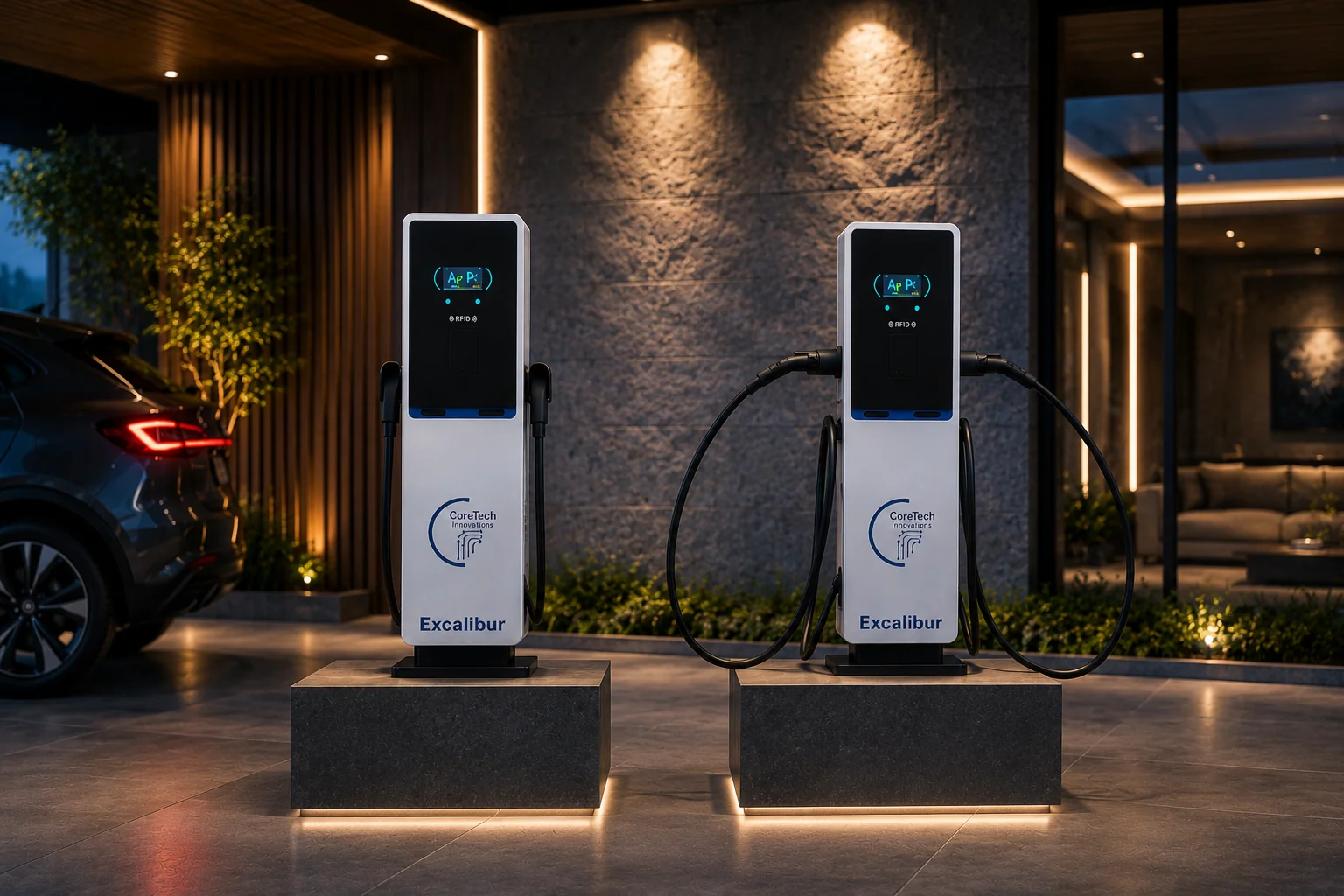
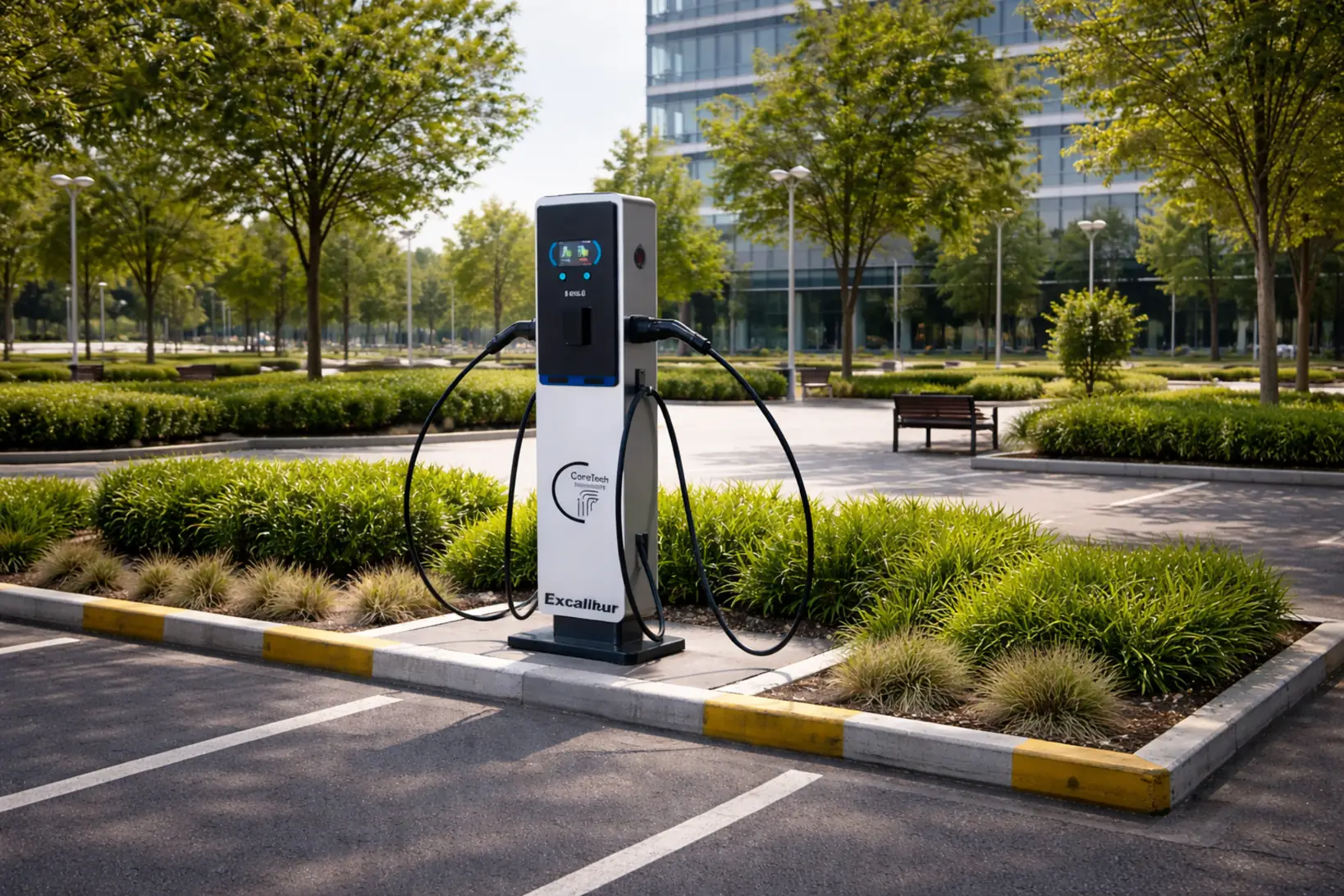
Commercial EV charging equipment is usually priced according to charger specification, site size, electrical infrastructure and installation complexity. CoreTech Innovations' Excalibur commercial charging solutions are available on a quotation basis so that pricing can reflect the requirements of each project.
For comparison, domestic wallbox chargers may start from around £350, while commercial installations require a tailored assessment covering hardware, labour, electrical work, networking and future expansion.
Installation Costs Are Only Part of the Budget
The initial installation cost is only one part of the overall commercial charging budget. Businesses should also consider electricity consumption, software subscriptions, maintenance, inspection, testing, network connectivity and future repairs.
Reliable equipment and scalable infrastructure can help reduce long-term operating costs and improve the overall return on investment.
Planning for Growth Can Reduce Future Costs
One of the most common mistakes is designing an installation around current demand alone. Many organisations begin with a small number of chargers and later need to expand as EV ownership increases.
Installing spare ducting, additional electrical capacity or infrastructure for future chargers during the first phase can be more economical than repeating major groundwork later.
Should Businesses Prioritise Cost or Value?
The lowest quotation does not always provide the best long-term value. Businesses should consider equipment reliability, warranty support, energy efficiency, maintenance requirements and compatibility with future expansion.
A dependable and scalable charging system can remain operational for many years, making lifetime cost more important than the initial purchase price alone.
Choosing the Right Commercial Charging Partner
Commercial EV charging projects require more than hardware supply. A successful installation begins with understanding site operations, vehicle usage, parking arrangements, electrical capacity and future charging demand.
CoreTech Innovations provides commercial charging solutions alongside domestic wallbox and portable EV chargers, helping organisations select infrastructure suited to workplaces, hospitality venues, commercial developments and fleets.
Budgeting with Confidence
Accurate budgeting starts with careful planning rather than relying on an average installation price. Each commercial site has different requirements and constraints.
Businesses should account for equipment, installation labour, electrical upgrades, civil engineering, smart management software, maintenance and future expansion when calculating the total project cost.
Looking Ahead
Cardiff's commercial property sector is evolving alongside the UK's transition towards electric transport. Workplace and destination charging will become increasingly important as more employees, visitors and company fleets switch to electric vehicles.
For businesses planning ahead, commercial EV charging is an investment in operational resilience, sustainability and customer experience. Choosing scalable and intelligently managed infrastructure today can help avoid unnecessary costs in the future.