EV Chargers for Car Parks: A Practical UK Charging Guide

- Car park EV charging should be planned around users, dwell time, traffic flow and available electrical capacity.
- AC charging often suits longer stays, while DC charging may suit faster turnover; neither is universally best.
- Charger numbers, accessible bay design, payment options and load management should be considered together.
- Installation costs vary by site and may include cabling, groundwork, grid upgrades and ongoing operating costs.
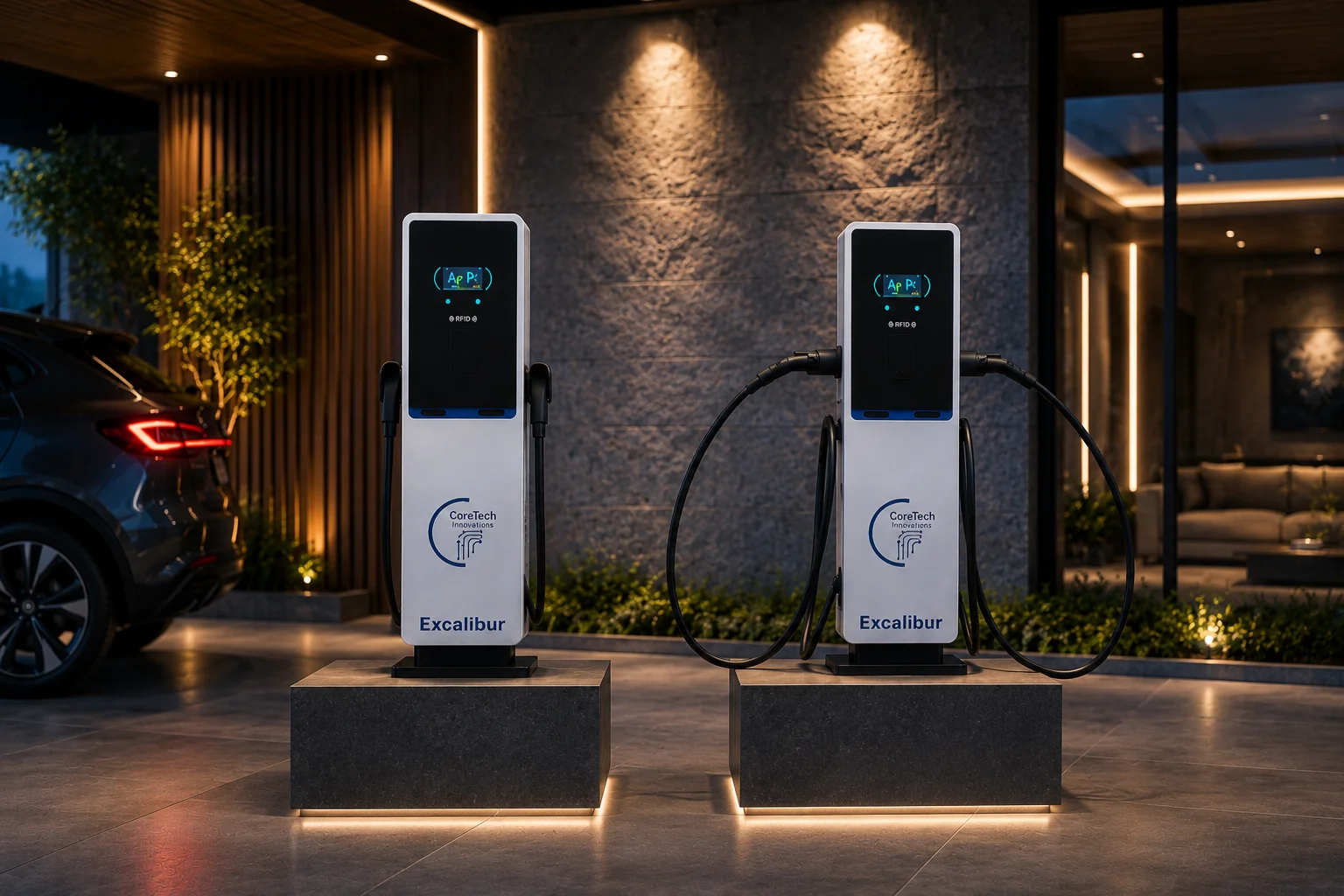
- CoreTech Excalibur is a commercial charging range; confirm individual product specifications before selection.
- CoreTech supplies EV charging products throughout the UK from its Cardiff base; installation availability is separate.
Plan EV chargers for commercial car parks across the UK. Compare AC and DC charging, bay layout, electrical capacity, installation costs, payment options and future expansion.
EV Chargers for Car Parks: A Practical UK Guide
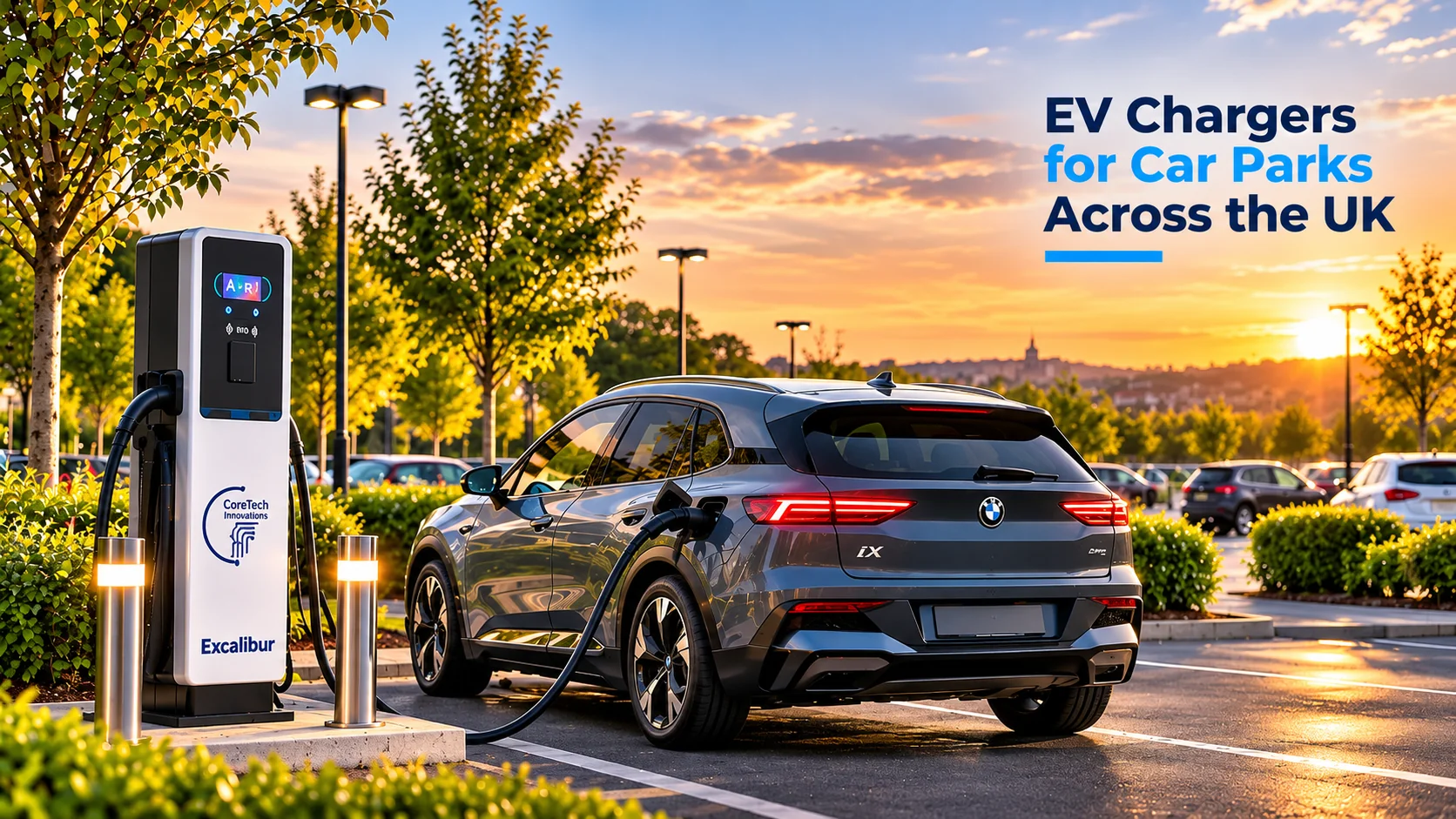
EV chargers for car parks can serve shoppers, visitors, employees, residents and fleet drivers while their vehicles are parked. The right charging arrangement depends on who uses the site, how long vehicles stay and how the car park operates.
This UK guide explains how to plan car park EV charging, compare AC and DC equipment, estimate infrastructure needs and manage charging access. It is relevant to retail, hospitality, workplace and privately managed parking sites.
CoreTech Innovations supplies EV charging products across the UK from its Cardiff base. Product supply should be distinguished from installation, which must be confirmed for each location.
Who Will Use Your Car Park EV Chargers?
Identify whether charging is for the general public, staff, visitors, residents, fleet vehicles or a combination. A commuter car park with long stays needs a different approach from a short-stay retail site.
Estimate typical parking duration, peak occupancy, repeat usage and whether drivers can move their vehicles after charging. These assumptions should inform charger type, number of bays and access rules.
AC vs DC EV Charging for Car Parks
AC charging is often appropriate when vehicles remain parked for several hours. Common commercial AC charger ratings include 7 kW, 11 kW and 22 kW, although actual charging power is limited by the vehicle, electrical supply and installation.
DC rapid charging can suit shorter visits and higher vehicle turnover, but equipment, grid connections and installation can cost substantially more. Faster charging is not automatically the best choice for every car park.
Compare realistic dwell times, expected energy demand, vehicle compatibility and whole-life costs before choosing AC, DC or a mixed approach.
How Many EV Charging Bays Does a Car Park Need?
Start with observed parking occupancy, the proportion of visitors likely to arrive in EVs, average stay length and how often bays can be reused. There is no universal charger-to-space ratio that fits every site.
Consider an initial deployment that can be expanded. Reserve suitable routes for future cabling and assess whether the electrical design can support additional chargers without expensive rework.
Where demand is uncertain, use measured utilisation after launch to guide the next phase.
Choosing Locations and Accessible Charging Bays
Place chargers where vehicles can manoeuvre safely, pedestrians can move freely and cables will not create avoidable trip hazards. Consider bay width, cable reach, protective bollards, lighting and clear signage.
Accessible charging should be considered from the outset, including space around vehicles, reachable controls, step-free routes and the needs of disabled drivers. Relevant UK accessibility guidance and site-specific obligations should be reviewed.
The shortest cable route is not necessarily the best customer location; balance accessibility, safety and installation practicality.
Electrical Capacity, Grid Connections and Load Management
A competent electrical designer or installer should assess existing capacity, maximum demand, earthing, protection, cable routes and any required distribution network operator involvement.
Load management may allow several chargers to share available capacity by adjusting output as demand changes. Its suitability depends on the equipment and control system selected.
For constrained sites, compare managed AC charging with the cost and lead time of a supply upgrade before committing to hardware.
How Much Does Car Park EV Charger Installation Cost in the UK?
Total project cost depends on charger type and quantity, available electrical capacity, distance to the connection point, trenching and reinstatement, signage, protective works, connectivity and any grid upgrade.
Allow for ongoing electricity, maintenance, software subscriptions, payment processing, inspections and support. A low equipment price does not necessarily mean a low total cost of ownership.
Ask for an itemised site-specific quotation rather than relying on a generic national installation price. Eligibility for grants or incentives should be checked against current official scheme rules.
Free, Paid and Restricted Car Park Charging
Decide whether charging will be complimentary, paid per unit of energy, limited to authorised users or available to the public. The right model depends on operating costs and the purpose of the car park.
If charging is offered to the public, review applicable UK rules on payment access, price transparency, reliability and data provision, including whether the installation falls within public charge point regulations.
Provide clear instructions and consider how drivers will obtain assistance if a payment or charging session fails.
Operating and Maintaining Commercial EV Chargers
Plan how charging bays will be monitored, who handles faults, how usage is reported and how drivers contact support. Check the prospective supplier’s warranty and maintenance arrangements.
For paid charging, consider back-office software, pricing controls and transaction records. Where equipment supports remote monitoring, it may help identify faults and understand utilisation.
Review signage and parking enforcement so charging spaces remain available to intended users.
EV Charging for Retail, Workplace and Hospitality Car Parks
Retail parks may prioritise convenient charging during shopping visits, while workplaces may benefit from slower charging across the working day. Hotels and hospitality venues may have longer overnight dwell times.
Fleet and depot sites can require predictable overnight energy delivery and coordinated charging schedules. Mixed-use car parks may benefit from different charger types or access policies for different users.
Choose a solution around real site behaviour rather than treating all commercial car parks alike.
Planning for Future EV Charging Demand
Consider spare ducting, cable routes, switchgear space, network connectivity and potential capacity expansion during the initial design. Future-ready planning does not require installing unused chargers immediately.
Use actual charger utilisation, parking trends and customer feedback to determine when to add bays or revise pricing and access arrangements.
CoreTech Excalibur for Commercial Car Park Projects
CoreTech’s Excalibur range is intended for commercial EV charging applications and may be considered when evaluating equipment for car parks.
Check the current product documentation for available power ratings, connectivity, payment compatibility, installation requirements and warranty terms before selecting a specific model.
Equipment selection should follow a site assessment rather than relying on a product name alone.
Commercial EV Charger Supply Across the UK
CoreTech Innovations is based in Cardiff and supplies EV charging products across England, Scotland, Wales and Northern Ireland.
Car park operators can explore the commercial charger range and discuss suitable products for their parking patterns and infrastructure. Installation availability, site surveys and commissioning arrangements should be confirmed separately for the project location.
Frequently Asked Questions About Car Park EV Charging
What type of EV charger is best for a car park? For longer stays, AC charging may be suitable; for short stops and faster turnaround, DC charging may be worth evaluating. Site demand and electrical capacity determine the right choice.
How many chargers should a commercial car park install? Start with parking occupancy, expected EV demand, dwell time and budget, then design for measured expansion rather than using a fixed ratio.
Can car park owners charge customers to use EV chargers? Yes, charging can be paid or complimentary, subject to the operating model and any applicable rules for publicly accessible charge points.
Does every car park need a grid upgrade? No. The need depends on existing capacity, proposed load and whether suitable load management is possible.
Does CoreTech supply chargers outside Cardiff? Yes. CoreTech supplies EV charging products across the UK; installation coverage should be confirmed separately.