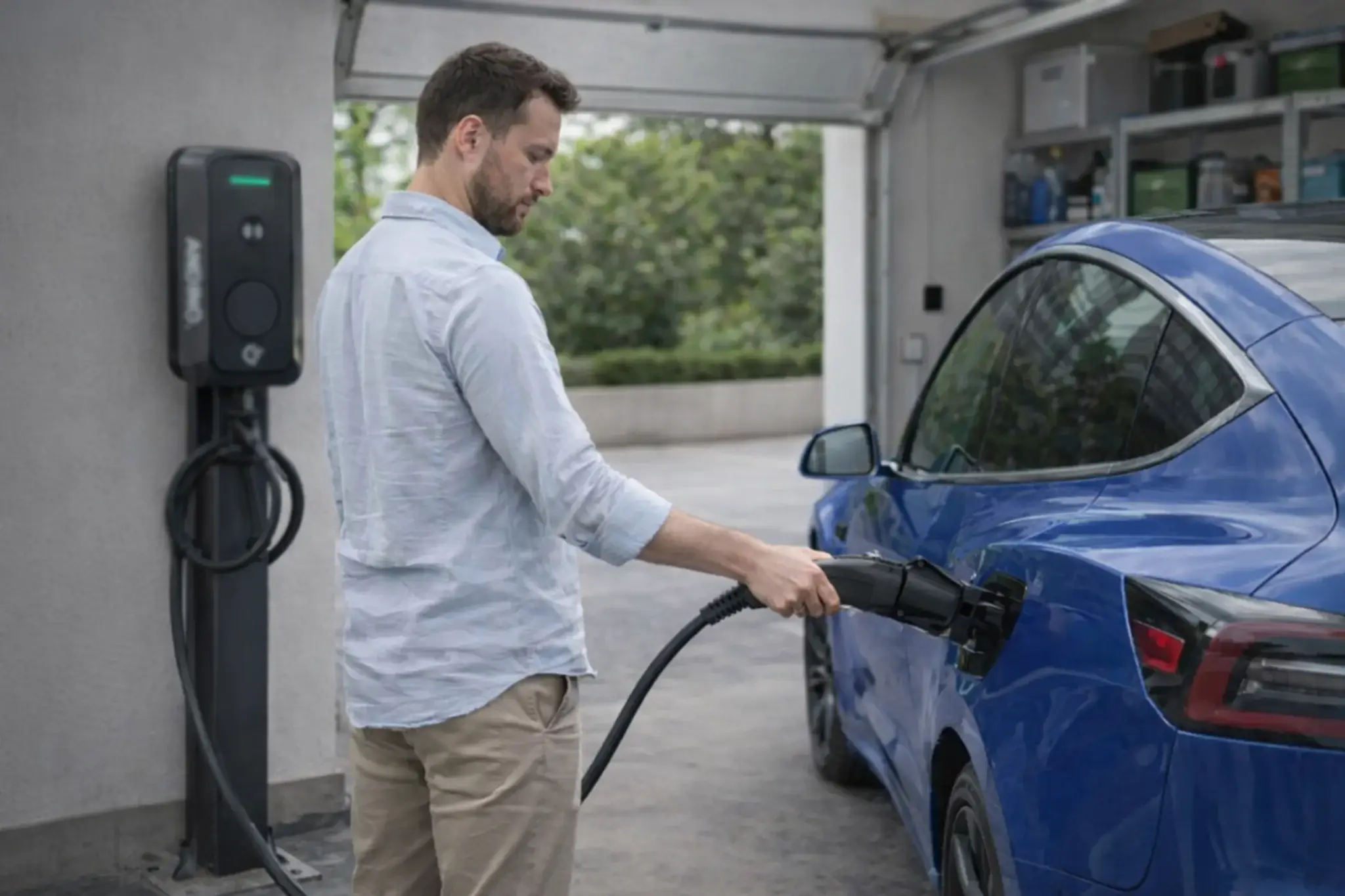

Charging in Cardiff: real life isn’t always predictable
Electric vehicles are no longer a novelty in Cardiff — they’re becoming part of everyday life. You see them parked along Cathays terraces, pulling into retail car parks off Newport Road, and popping up more often in workplace bays around Cardiff Bay.
The city’s public charging network has been steadily expanding, but anyone who drives an EV in the real world knows charging isn’t always neat and predictable.
Sometimes you’re visiting family and there’s no dedicated charge point. Sometimes you’re staying in a holiday let, working on a site, or relying on on-street parking where a home charger isn’t an option.
And sometimes you simply want a bit of backup — the same way you might keep a spare phone charger in your bag.
Why Cardiff’s charging needs aren’t one-size-fits-all
Cardiff’s housing stock and street layouts create a very mixed charging landscape. Plenty of people have driveways or allocated parking and can install a home charger.
But many others live in flats, HMOs, or terraced streets where off-street parking simply isn’t part of the deal.
That’s why the city’s EV future will rely on a mix of charging options — home, workplace, destination, public on-street, and portable.
What a portable EV charger is (and what it isn’t)
A portable EV charger isn’t magic, and it isn’t meant to replace a properly installed home wallbox for every driver.
Instead, it’s a flexible tool: a way to charge from appropriate power sources when you’re away from your usual setup.
In practical terms, portable charging can help with weekend visits, longer stays without dedicated EV infrastructure, workplaces where fixed units aren’t practical, and as a reliable plan B when you’re dependent on public networks.
The key is to treat it like any electrical appliance: use it sensibly, ensure sockets and cabling are suitable, and follow guidance and safety requirements.
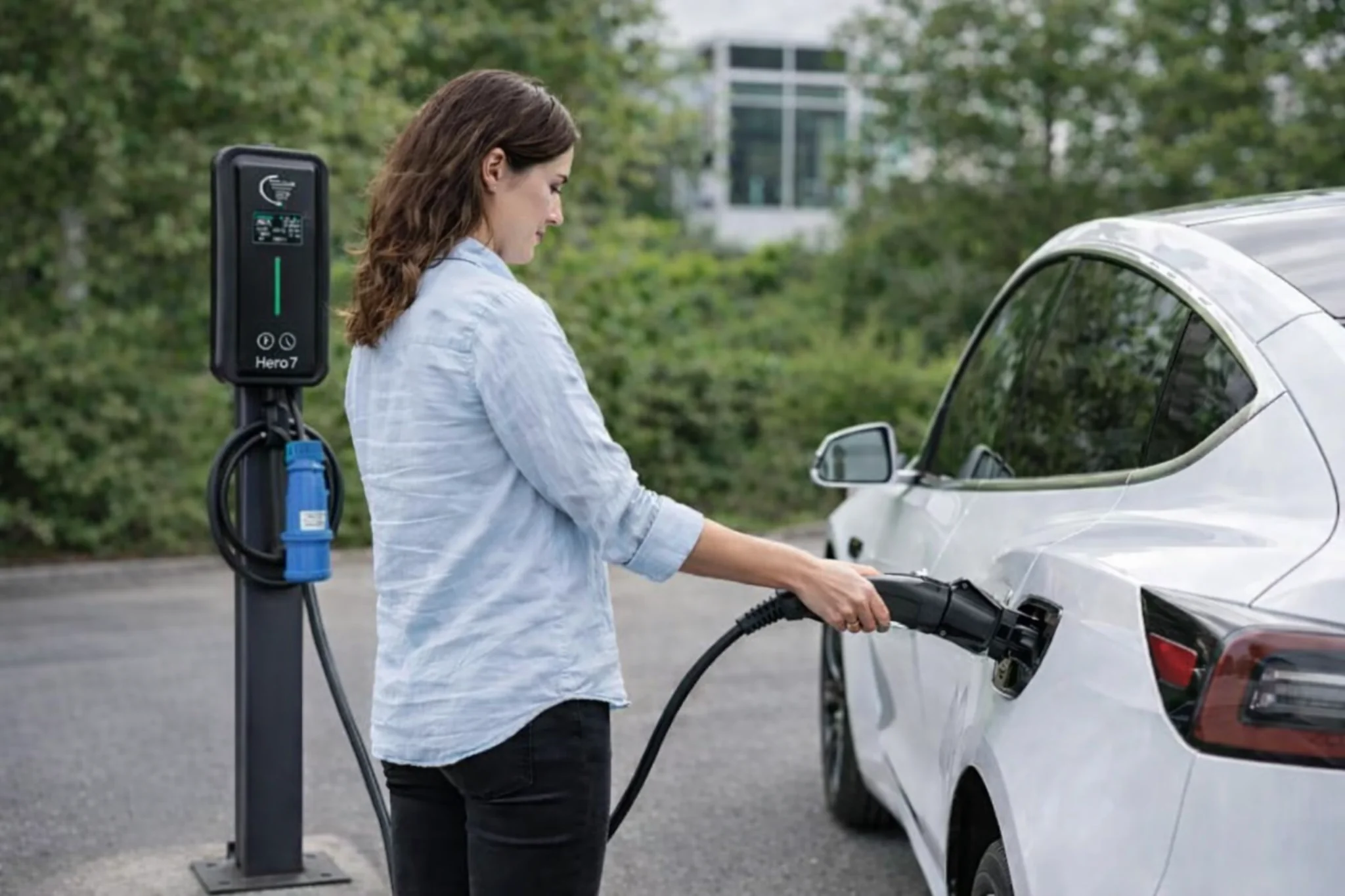
Meet the Hero 7: portable, UK-friendly, and built for everyday use
The Hero 7 is positioned as a genuinely portable charger that’s easy to use in different settings — “home, work or on the road” — without requiring a permanent installation.
From the specifications provided, several details stand out for UK drivers: a practical 3.5 kW to 7 kW power range, 230V ± 15% tolerance aligned with typical UK supply, and a Type 2 (IEC 61851) connector standard that matches most modern EVs in the UK and Europe.
Cable length matters more than people expect — and the Hero 7’s input 0.5m / output 10m setup is designed to help when socket placement or parking angles are awkward.
Portability details like a carrying case, lightweight design, and built-in handle are what make “portable” actually portable day to day.
Smart charging isn’t just for wallboxes anymore
When people hear “smart charging”, they often picture a fixed home wallbox. But expectations in the UK have been moving steadily towards smart functionality as a baseline for charge points.
The goal isn’t to overwhelm drivers with tech — it’s to make charging better aligned with the grid, renewable generation, and consumer protection.
The Hero 7’s smart angle shows up in practical features: Wi-Fi, Bluetooth, mobile app control, energy consumption monitoring, and a 2.8” display with a touch-key interface for at-a-glance information.
For Cardiff drivers, this matters because charging is often opportunistic. If you’re using a portable charger at a different location, being able to monitor, check consumption, and manage sessions through an app is the difference between “set and hope” and “set and know”.
Safety and resilience: what to look for in portable charging
With portable charging, safety isn’t optional — it’s fundamental. Real-world charging can involve variable conditions, unpredictable socket locations, longer cable runs, and different ambient temperatures.
The Hero 7 lists protections such as over/under voltage, over-current, ground protection, over-temperature protection, relay sticking protection, plus IP54 protection.
In everyday terms, these protections are about reducing risk in the exact scenarios where portable charging happens — and building confidence for drivers who are still getting used to EV ownership.
Where a portable charger makes sense in Cardiff and South Wales
A portable charger is most useful when it removes real local friction. In and around Cardiff, that often means terraced streets, flats, renting, shared parking, and situations where installing a home charger is difficult or not possible.
It can also help trades, contractors, and professionals moving between sites across South Wales who don’t have consistent access to dedicated chargers.
And for visiting family, staying overnight, or traveling around the Valleys and the coast, portable charging can reduce dependency on public networks and ease the low-level “will I find a charger?” stress.
Public charging in Cardiff continues to expand, but availability and reliability can vary. A portable charger won’t replace rapid charging when you’re in a hurry — but it can give you options when plans change.
How portable charging fits into a smarter EV future
Cardiff is clearly moving towards a more joined-up EV ecosystem: growing public infrastructure, fleet electrification ambitions, and more EV drivers with different living arrangements.
In that context, the future isn’t about betting everything on one kind of charger. It’s about having the right charging tool for the right place: home smart charging for routine overnight use, workplace and destination chargers for predictable top-ups, public infrastructure for those without off-street options, and portable smart charging for flexibility and resilience.
From a user perspective, that’s what “smart” really means: not just connectivity, but practical adaptability.
Conclusion: a more flexible charging culture for Cardiff
Cardiff’s EV transition is happening in the real world — shaped by terraced streets, busy working lives, and a growing expectation that sustainability shouldn’t come with unnecessary hassle.
Portable solutions like the Hero 7 won’t replace every other charging method — and they don’t need to. Their value is in making EV ownership more workable for more people: renters, commuters, site workers, and anyone who wants a reliable back-up with modern smart features.
If the future of EV charging in Cardiff is about removing friction, building confidence, and using energy more intelligently, portable smart charging will be part of that mix — not as a gimmick, but as a genuinely useful piece of the puzzle.