Home vs Public EV Charging Costs: Which Is Cheaper for Cardiff Drivers?

- Home charging is generally the cheapest option for Cardiff drivers with suitable off-street parking.
- Public charging provides greater flexibility and faster charging, but regular dependence on it can increase annual EV running costs.
- Smart charging can help households schedule charging around suitable off-peak electricity periods and monitor energy use more effectively.
- A home wallbox involves an upfront hardware and installation cost, but frequent users may recover that investment over time compared with regular public charging.
- For many Cardiff households, the most practical approach is home charging for everyday mileage supported by public charging when extra range or speed is needed.
Compare home and public EV charging costs in Cardiff, including smart charging, wallbox costs, public charging flexibility and practical ways to reduce everyday EV running costs.
How Much Does Home EV Charging Cost?
The cost of charging an EV at home depends mainly on the household electricity tariff, the amount of energy added to the battery and charging losses between the electricity supply and the vehicle.
Households using EV-specific tariffs may be able to charge at lower overnight rates during designated off-peak periods.
Whether an EV tariff saves money overall depends on the household's wider electricity consumption as well as the advertised overnight charging rate.
How Much Does Public EV Charging Cost?
Public EV charging prices vary depending on charger speed, network operator, location and payment arrangement.
Rapid and ultra-rapid chargers generally cost more than standard public chargers because they provide significantly higher charging power and greater convenience for drivers who need range quickly.
Some networks offer membership or subscription rates, while supermarkets, hotels, workplaces and leisure destinations may use different pricing structures.
Cardiff drivers should therefore check the tariff and any additional conditions before starting a public charging session.
A Simple Comparison of EV Charging Costs
When home and public charging are compared under similar circumstances, home charging is generally more cost-effective for drivers with access to convenient overnight charging.
Rapid and ultra-rapid public chargers usually cost more, but they provide greater speed and flexibility for longer journeys and situations where a quick top-up is required.
Public charging may also involve additional expenses such as parking charges, connection fees, network subscriptions or overstay fees.
For many Cardiff drivers, using home charging for routine journeys and public charging when additional flexibility is required provides a practical balance between convenience and cost.
What Could the Difference Mean Over a Year?
A Cardiff driver covering 10,000 miles annually in an EV averaging approximately 3.5 miles per kWh would require around 2,857kWh of usable energy over the year.
The actual annual charging cost depends on vehicle efficiency, weather, driving style, electricity tariffs, charging losses and the proportion of charging completed at home or on public networks.
A smaller efficient EV used mainly for local journeys may consume considerably less energy than a larger electric SUV travelling regularly on the M4.
Why Public Charging Costs More
Public charging operators must recover more than the cost of electricity itself. Their prices also contribute towards charger hardware, installation, grid connections, site agreements, software, payment systems, maintenance, repairs and customer support.
Rapid chargers are especially expensive to install and operate because they require substantial electrical infrastructure and high-power grid connections.
Tax treatment also contributes to the difference, with domestic electricity generally attracting a lower VAT rate than public EV charging.
When Public Charging Still Makes Financial Sense
Public charging remains valuable even when it costs more per unit of electricity.
It can be particularly useful for longer journeys, urgent top-ups, drivers without home charging, hotel stays and situations where workplace or destination charging is available.
The larger cost difference becomes more significant when rapid public charging is used as the vehicle's main energy source rather than as an occasional convenience.
The Cardiff Parking Question
The economics of EV charging are closely connected to Cardiff's housing and parking arrangements.
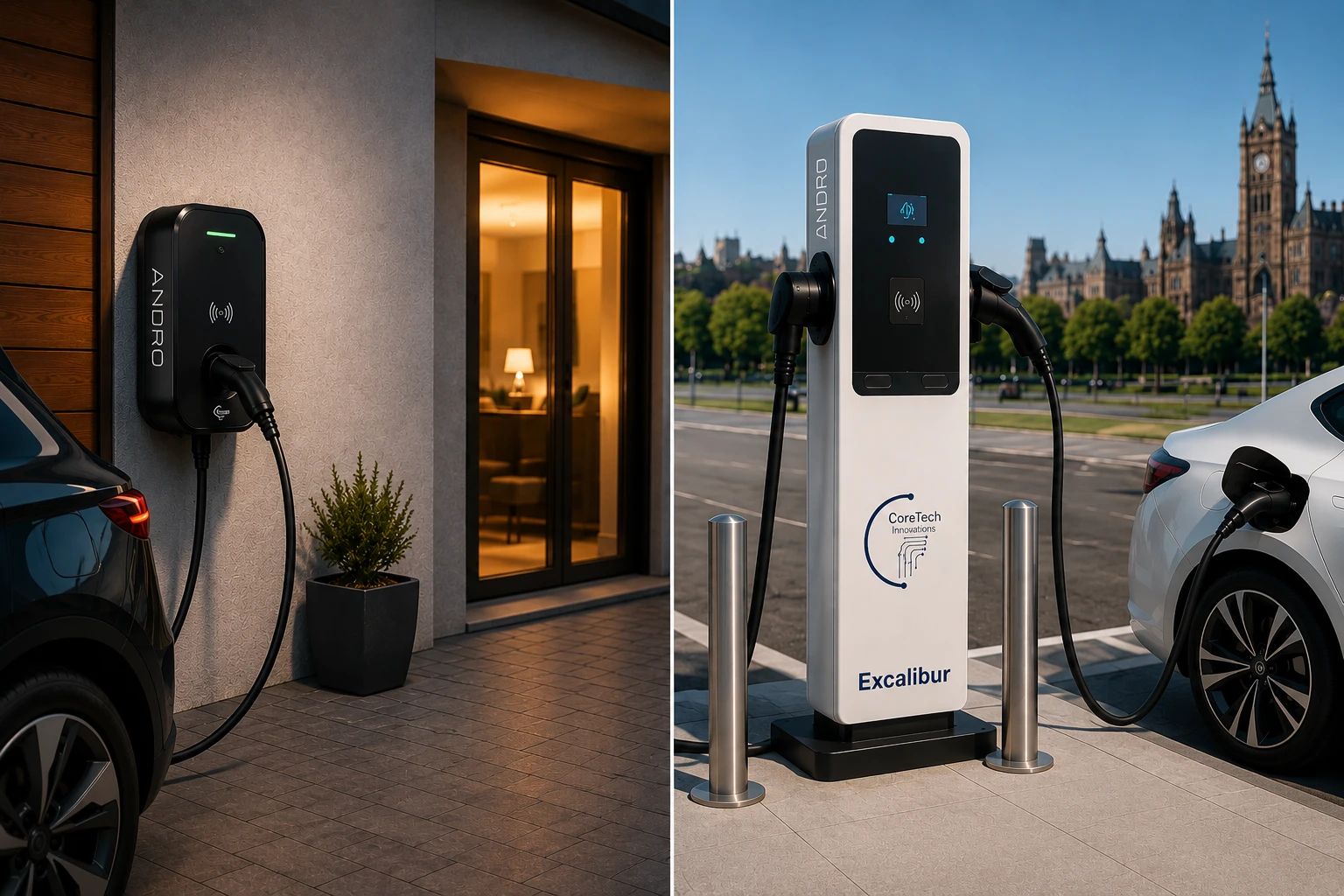
Residents with private driveways or allocated parking can usually consider a fixed home wallbox, while those living in terraces or flats may rely more heavily on public, workplace or on-street charging.
This can create a meaningful difference in charging costs between drivers who can charge privately at home and those who depend primarily on shared infrastructure.
As Cardiff expands its public and on-street charging network, affordability will remain just as important as charger availability for households without private parking.
Does a Home Charger Pay for Itself?
A home charger involves an upfront cost, so cheaper electricity does not automatically mean the lowest immediate expense.
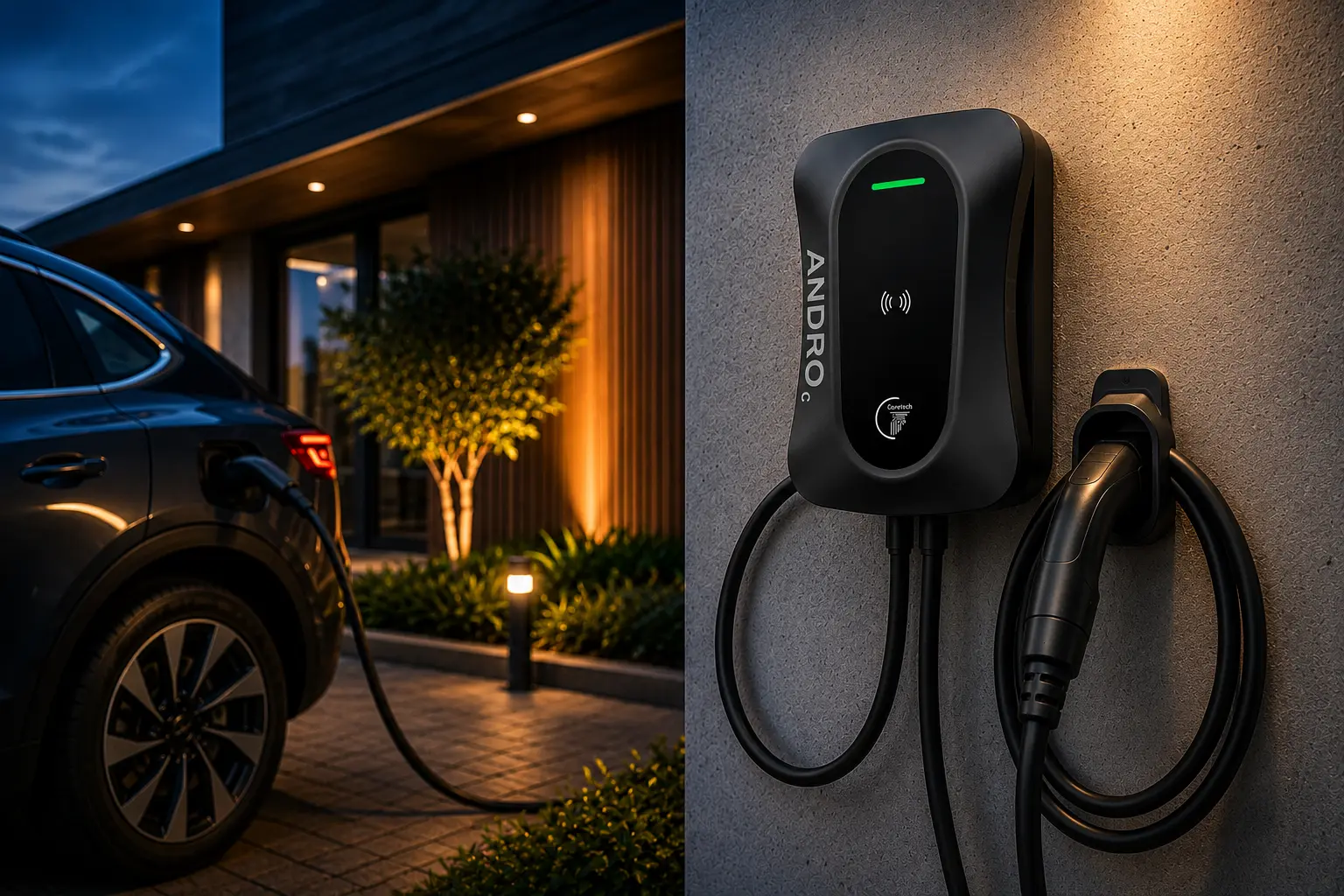
CoreTech Innovations currently lists domestic wallbox hardware from around £350, excluding property-specific installation costs.
Installation costs vary according to cable length, consumer-unit condition, earthing requirements, available electrical capacity and whether additional work or groundworks are needed.
For drivers who would otherwise rely regularly on public charging, a home wallbox may recover its initial cost over time through lower everyday charging expenses.
The payback period depends on the final installed price, annual mileage, electricity tariff and how frequently the charger is used.
How Smart Charging Can Reduce Costs
Smart charging allows a vehicle to be connected when convenient without necessarily drawing electricity immediately.
A driver can plug in after arriving home and schedule charging to begin during a suitable overnight off-peak period.
Useful smart functions may include charging schedules, app-based monitoring, energy-use records, remote start and stop controls, household load management and solar integration where supported.
The financial value of these features depends on the household electricity tariff. Scheduling provides the greatest benefit where electricity prices genuinely vary between peak and off-peak periods.
Socketed or Tethered Home Charger?
Choosing between a socketed and tethered wallbox does not normally change the electricity cost, but it does affect everyday convenience.
A tethered charger has a permanently attached cable, allowing the driver to park and plug in without retrieving a separate charging lead.
A socketed charger requires a detachable cable, which can provide a tidier appearance and greater flexibility over the cable used.
CoreTech Innovations offers both formats across its Andro wallbox range, allowing drivers to choose based on parking layout and personal preference.
Ways Cardiff Drivers Can Keep Charging Costs Down
Compare electricity tariffs using the household's total electricity consumption rather than focusing only on the lowest advertised overnight EV rate.
Use home charging for routine mileage where possible and reserve rapid public charging for journeys where its speed provides genuine value.
Check public charger pricing before starting a session, as network rates and subscription arrangements can vary significantly.
Follow the vehicle manufacturer's battery-care guidance rather than automatically charging to 100% after every journey when it is not required.
So, Which Is Cheaper?
For Cardiff drivers with suitable off-street parking, home charging is normally the least expensive way to power an electric vehicle.
Public charging remains essential for longer journeys, urgent top-ups and households that cannot install private charging equipment.
The two charging methods perform different roles rather than competing directly in every situation.
For many Cardiff households, a smart home wallbox for everyday charging supported by public infrastructure when additional range or speed is needed provides the most practical balance.
Looking Ahead
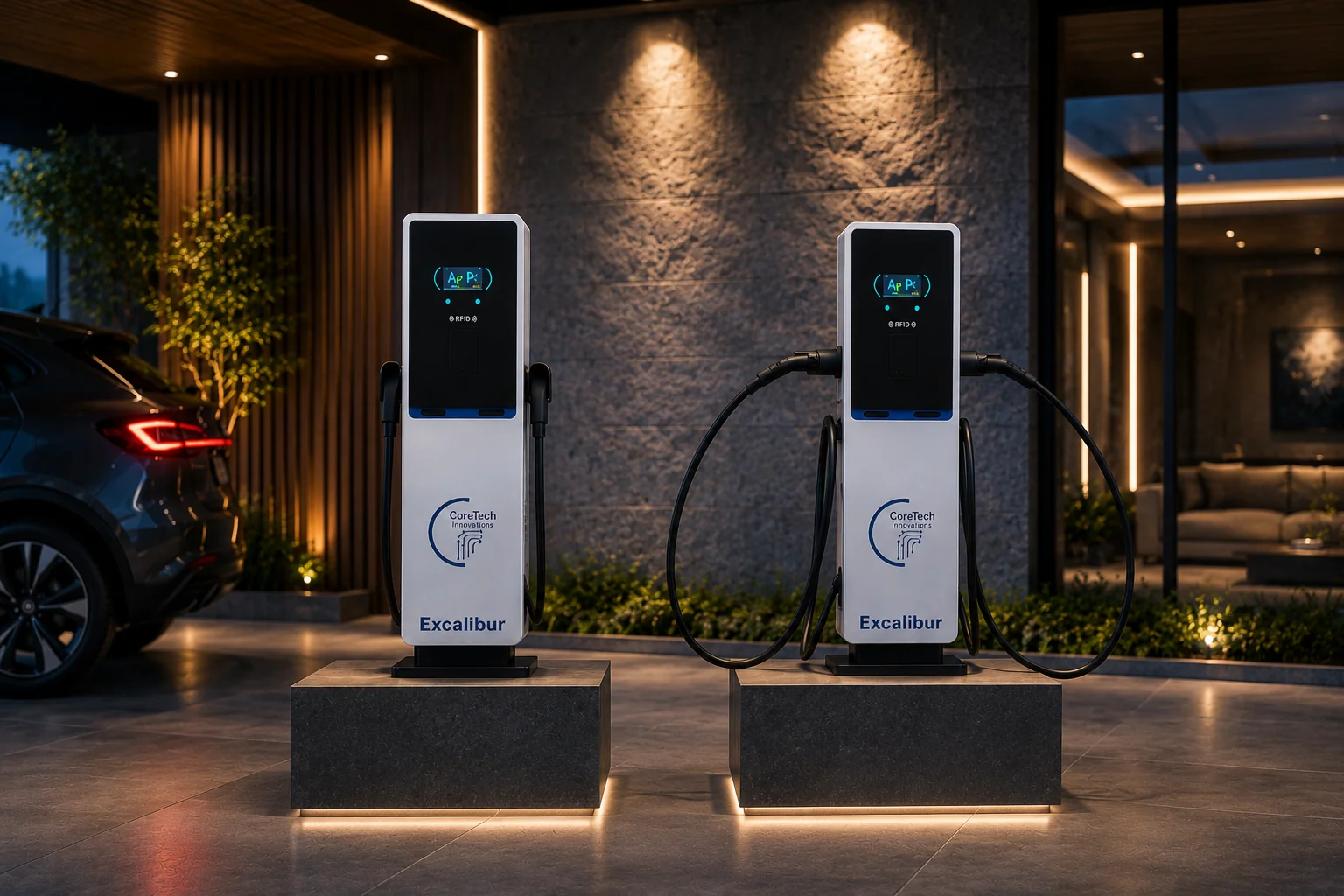
Cardiff's charging landscape will continue to include home wallboxes, workplace chargers, lamp-column units, destination charging and rapid public hubs.
The challenge is not simply expanding charger numbers, but ensuring that charging remains accessible, dependable and affordable for drivers with different housing and parking arrangements.
For households with private parking, smart home charging offers a clear route to lower everyday running costs, while residents without it will depend on continued improvements in on-street and public charging provision.
As electric mobility grows, many drivers are likely to use a combination of charging methods, relying on home charging for affordable everyday energy and public charging when flexibility is more important.