How to Choose the Best EV Charger Installer in Cardiff: 10 Questions to Ask

- A good EV charger installer should have relevant electrical competence and practical experience with EV charging installations.
- The quotation should be based on the property's actual electrical capacity, consumer unit, cable route, charger location and household energy demand.
- Homeowners should confirm exactly what is included in the installation price and which items may result in additional charges.
- Questions about electrical protection, certification, load balancing, grants and future solar or battery upgrades should be discussed before installation begins.
- Aftercare, warranty arrangements and installation quality can be just as important as the initial installation price.
Choosing an EV charger installer in Cardiff? Ask these 10 important questions about qualifications, property assessment, installation costs, electrical safety, grants, future energy needs and aftercare.
1. Are You Qualified and Experienced in Installing EV Chargers?
EV charging places a sustained electrical load on a property, so the work should be carried out by someone with appropriate electrical competence and practical experience in EV charger installations.
Ask the installer about their qualifications and how regularly they install EV charging equipment.
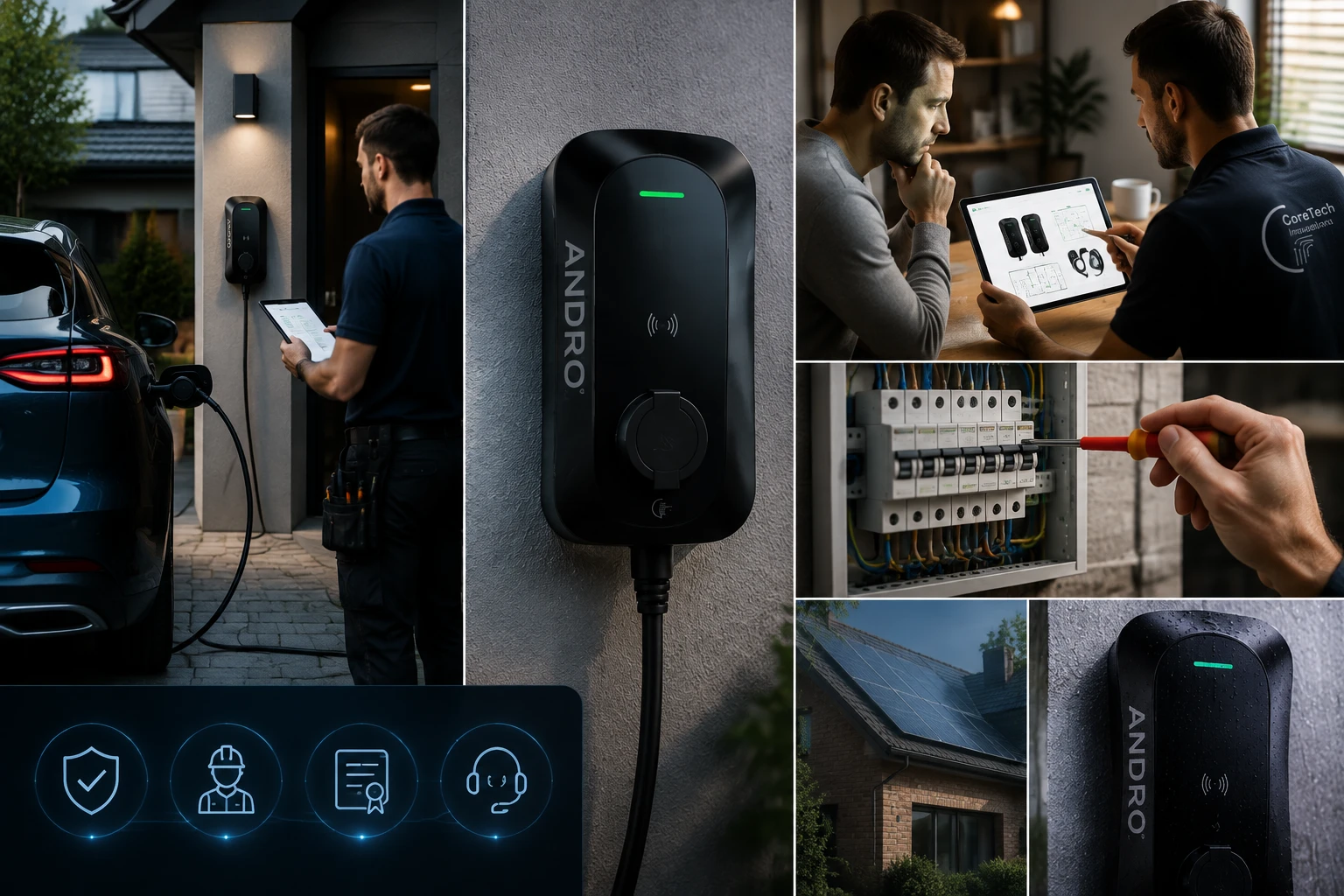
An experienced installer should understand household electrical demand, charger configuration, protective equipment and the practical considerations involved in positioning and connecting a home wallbox.
The size of the installation company is less important than the competence and relevant EV experience of the person carrying out the work.
2. Will You Assess My Property Before Finalising the Quote?
A quotation should be based on the actual requirements of the property rather than a generic standard-installation assumption.
The installer should consider the position and condition of the consumer unit, the proposed charger location, the cable route and the household's overall electrical demand.
A modern Cardiff property with an accessible consumer unit close to the driveway may allow a straightforward installation, while an older property, detached garage or longer cable route may require additional planning and electrical work.
Some straightforward installations can initially be assessed using photographs, video and electrical information supplied by the homeowner, provided the final quotation is based on sufficient evidence rather than guesswork.
3. What Exactly Is Included in the Installation Price?
The term "standard installation" can mean different things between installers, so homeowners should ask for a clear breakdown of what the quotation includes.
This may include cable length, cable containment, drilling, protective equipment, commissioning and work around the consumer unit, while long cable routes, groundworks or additional electrical upgrades may cost extra.
It is also important to separate the price of the EV charger itself from the installation cost. A charger price displayed online should not automatically be interpreted as the complete installed price.
A good quotation should clearly explain what is included and identify the circumstances that could result in additional charges.
4. Can My Electrical Supply Support the Charger?
A home EV charger can represent a significant additional electrical load, particularly when other high-demand appliances are operating at the same time.
Electric showers, induction hobs, ovens, heat pumps and other electrical equipment can all contribute to household demand.
A competent installer should therefore assess the available electrical capacity of the property rather than considering the EV charger in isolation.
This is particularly important if the household may add another EV, solar panels, battery storage, a heat pump or other significant electrical equipment in the future.
5. Would My Home Benefit from Dynamic Load Balancing?
Dynamic Load Balancing allows a compatible charger to respond to changing electricity demand within the home.
If household consumption increases, the system can temporarily adjust the power available for EV charging and increase it again when demand elsewhere falls.
This can be particularly useful in homes where several high-demand electrical appliances are regularly used at the same time.
Load balancing is not automatically necessary for every property, so a good installer should explain whether it provides a genuine benefit for the individual home.
6. How Will the Charger Be Protected Electrically?
A home EV charger should be installed with suitable electrical protection to help safeguard against current leakage, overloading and other electrical risks.
The exact protection required can vary depending on the charger model, the safety features built into the unit and the electrical setup of the property.
The installer should identify what protection the charger already provides and whether any additional equipment is needed for a safe installation.
The final arrangement should reflect the actual requirements of the property rather than applying exactly the same solution to every installation.
7. What Electrical Certification Will I Receive?
Installation should not simply end when the charger powers up and begins charging the vehicle.
The completed electrical work should be appropriately inspected, tested and documented.
Ask the installer what certification and paperwork you will receive after completion and keep these documents with the property's electrical records.
Good documentation can be useful if the electrical system is changed later, another electrician needs to inspect the work or the property is sold.
8. Do You Meet the Requirements for Government EV Charger Grants?
Some Cardiff residents may be eligible for government support towards EV charger installation, depending on their circumstances and the schemes available at the time.
Eligibility criteria, grant amounts and installer requirements can change, so customers should check the latest official guidance before purchasing equipment or arranging installation.
Where a relevant scheme requires an authorised installer, this should be confirmed before installation begins.
A professional installer should not guarantee grant eligibility until the applicant, property and installation circumstances have been properly assessed.
9. Can the Charger Support Solar Panels or Future Home-Energy Upgrades?
A home EV charger may remain at the property longer than the current vehicle, so future household energy plans should be considered during charger selection.
If the property already has solar panels, ask whether the selected charger can make practical use of solar generation.
Future plans for solar PV, battery storage, heat pumps or another electric vehicle should also be discussed before the charger is chosen.
There is little benefit in paying for features that are unlikely to be used, but selecting equipment without functionality that will soon be required can also prove restrictive.
A good installer should help identify a charger that suits both current requirements and realistic future plans.
10. What Happens if Something Goes Wrong After Installation?
Aftercare can easily be overlooked when installation quotations are being compared.
Ask who should be contacted if the charger stops operating correctly, loses connectivity or develops an electrical problem.
It should also be clear how responsibility is divided between the charger manufacturer and the installer because faults can relate to hardware, installation, internet connectivity, vehicle settings or software.
Check warranty and aftercare arrangements before purchasing and ask whether call-out charges could apply.
A good installer should be able to explain what happens if a problem develops and who will carry out the initial diagnosis.
Price Matters, but It Should Not Be the Only Factor
Comparing several EV charger installation quotations in Cardiff is sensible, but the final price should not be considered in isolation.
One quotation may include additional electrical protection, a longer cable route or load-management equipment, while another may assume that no extra work is required.
The cheapest quotation can still represent excellent value if the installation is genuinely straightforward.
The important point is to understand what each quotation includes and why one proposal may cost more or less than another.
Avoid Vague Quotations
A professional quotation should make it reasonably clear which charger will be installed, where it will be positioned, how the cable will reach it and what significant work is included.
The installer should also be able to explain why a particular charger has been recommended for the property.
A household with one EV and a predictable overnight charging routine may only need a straightforward wallbox, while a property with solar panels or higher electrical demand may benefit from more advanced energy-management features.
The recommendation should reflect the household's actual requirements rather than the same charger being suggested to every customer.
Consider Where You Park the Car
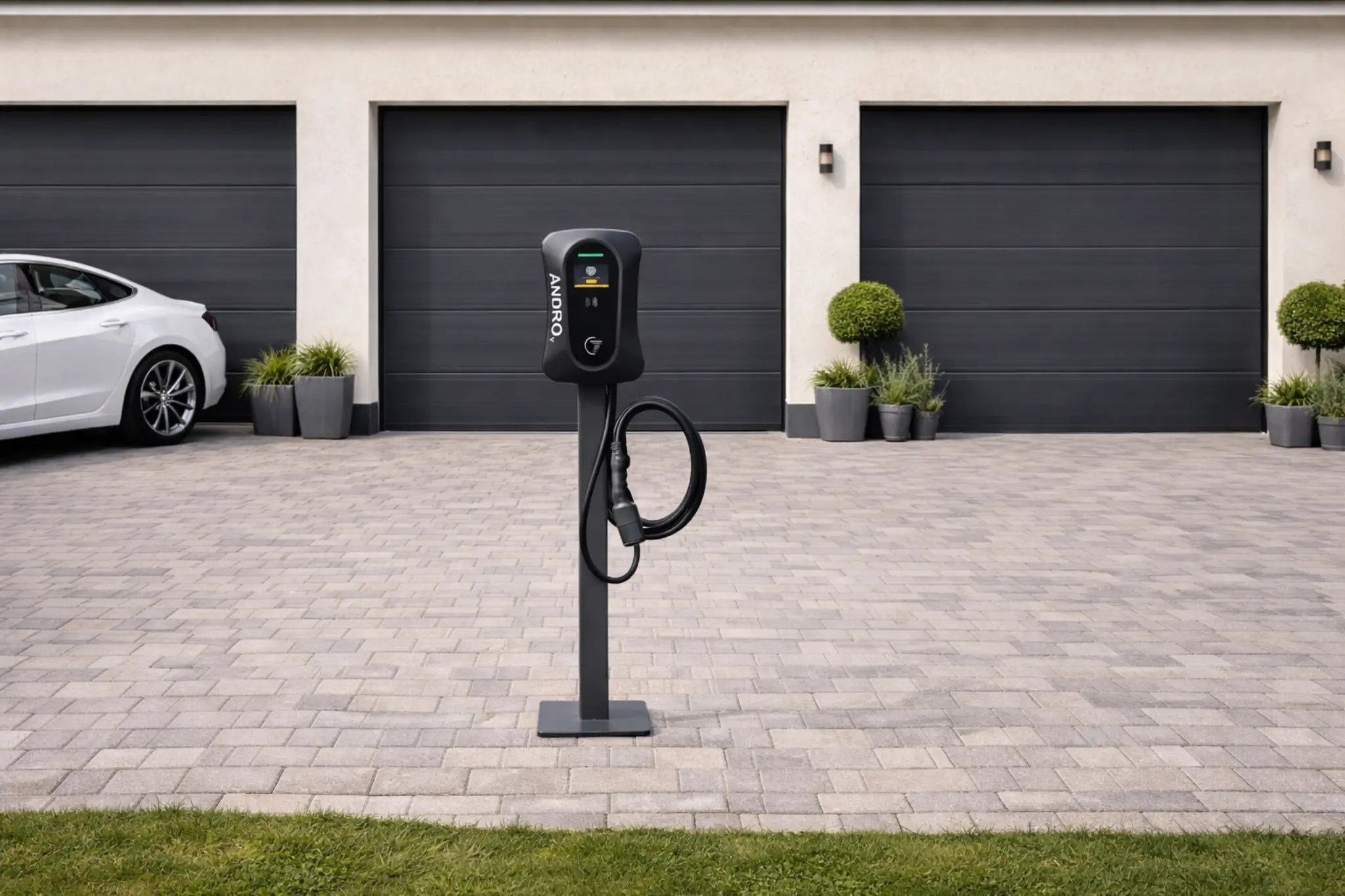
The position of the vehicle on the driveway can have a significant effect on charger placement and everyday convenience.
Consider where the vehicle's charging port is located, whether the car is normally parked forwards or backwards and whether another vehicle sometimes uses the same parking space.
Poor charger positioning can result in stretched cables, awkward daily use or unnecessary trip hazards.
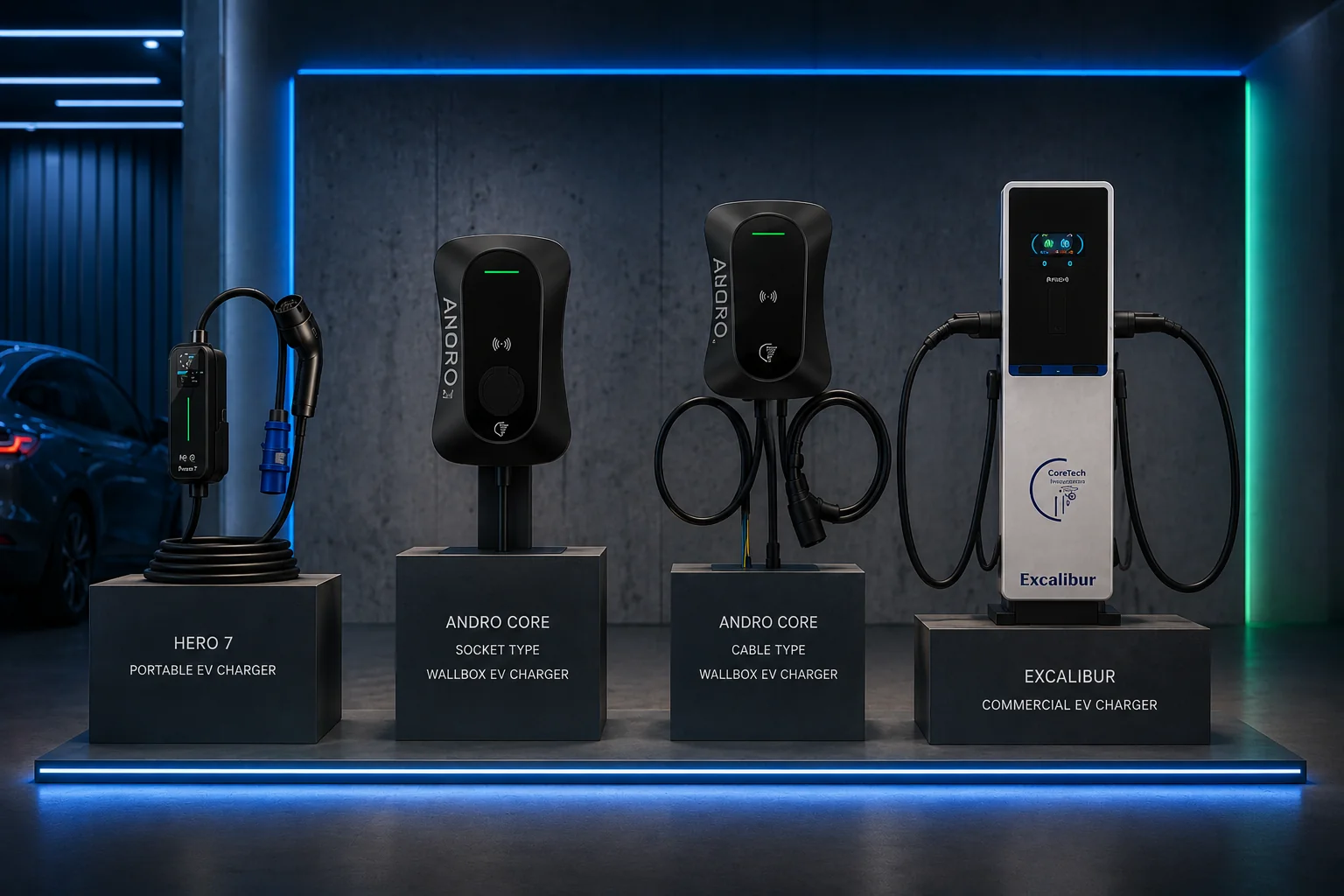
This should also be considered when choosing between a socketed and tethered charger, as the most practical format depends largely on the driveway layout and charging routine.
Why Electrical Safety Matters
Home EV charging usually takes place for several hours at a time and may happen several times each week.
A dedicated EV charging point that has been properly selected and installed provides a more appropriate long-term solution than unsuitable household charging arrangements.
The installer should be willing to explain the electrical protection being provided, how the charger will be connected and why the proposed arrangement is suitable for the property.
Safety should form part of the installation plan from the beginning rather than being treated as an afterthought.
Choosing an Installer for Cardiff's Changing Homes
EV charging is increasingly becoming part of a wider household energy system that may also include solar panels, battery storage, heat pumps and smart electricity tariffs.
The best EV charger installer is therefore not simply the person who can mount a wallbox most quickly.
A good installer should understand how the charger fits into the property as a whole, including current electrical demand and likely future energy requirements.
For some Cardiff homes this may mean a straightforward charger and overnight schedule, while others may benefit from load balancing, solar integration or planning for additional electrical demand.
Final Thoughts
Choosing an EV charger installer in Cardiff should involve more than finding the lowest local quotation.
Ask about experience, property assessment, electrical capacity, protection, certification, installation costs, load balancing, available grants, future energy plans and aftercare.
The answers should show whether the installer has genuinely assessed the property or is simply offering a standard package.
Choosing the right charger matters, but choosing someone who can install it safely and with the property's actual requirements in mind is just as important.
A well-planned installation should provide reliable and convenient charging for years, and asking the right questions before work begins is one of the simplest ways to make that more likely.