Three-Phase EV Chargers: 11kW, 22kW and UK Installation Guide

- Three-phase EV charging typically enables 11kW or 22kW AC equipment where the electrical supply and installation are suitable.
- A vehicle’s onboard AC charger can limit actual charging power even when connected to a 22kW unit.
- A 22kW AC charger generally needs an appropriate three-phase supply and sufficient spare electrical capacity.
- Electrical assessment, protection, earthing, DNO requirements and load management should be considered before installation.
- Choose charger power based on vehicle compatibility, parking duration, expected demand and whole-life cost.
- CoreTech supplies EV charging products throughout the UK; installation coverage must be confirmed separately.
Understand three-phase EV charging in the UK, including 11kW vs 22kW speeds, vehicle compatibility, electrical supply, installation costs and commercial options.
Three-Phase EV Chargers: 11kW, 22kW and UK Installation Guide
A three-phase EV charger can provide higher AC charging power than a typical single-phase home unit, but the best choice depends on the vehicle, available electrical capacity and how long it is parked.
This guide explains three-phase charging for UK homeowners, workplaces and commercial sites, including 11kW and 22kW options, electrical supply checks, installation considerations and realistic charging speeds.
CoreTech Innovations is based in Cardiff and supplies EV charging products throughout England, Scotland, Wales and Northern Ireland. Installation arrangements must be confirmed separately for each location.
What Is a Three-Phase EV Charger?
A three-phase EV charger is AC charging equipment designed to draw power from a suitable three-phase electrical supply. The three AC phases can deliver more power than a comparable single-phase connection when the installation and vehicle support it.
In the UK, low-voltage supplies are commonly described as approximately 230V phase-to-neutral and 400V phase-to-phase. The charger must be matched to the actual supply and designed circuit.
The car converts AC electricity to battery-compatible DC using its onboard charger. The vehicle, not just the wallbox rating, determines the maximum AC charging rate.
Single-Phase vs Three-Phase EV Charging
A typical 7kW domestic charging point uses a suitable single-phase connection, whereas 11kW and 22kW AC charging generally use three phases.
A property having three-phase electricity does not mean a 22kW unit is automatically suitable: spare capacity, protection, distribution arrangements and local network requirements still matter.
A single-phase charging point may also be installed at a three-phase property if the electrical design supports it.
11kW vs 22kW Three-Phase EV Chargers
An 11kW three-phase charger typically draws about 16A per phase at nominal UK voltage, while a 22kW three-phase charger typically draws about 32A per phase. These are approximate electrical comparisons, not installation instructions.
A car with an 11kW onboard AC charger will generally be limited to around 11kW even when connected to a 22kW AC charge point. Some cars accept only single-phase AC charging and may receive substantially less power.
Check the vehicle manual, connector compatibility and charger specifications before paying for higher-rated equipment.
How Fast Can a Three-Phase EV Charger Charge?
A simple estimate divides the energy to be added in kWh by the actual average charging power in kW. For example, adding 33kWh at an average of 11kW would take about three hours before allowing for losses and charging variations.
Real charging times depend on vehicle limits, battery conditions, charging losses, power sharing and the available electrical supply. A 22kW label does not guarantee 22kW charging for every vehicle.
For sites with long parking periods, a lower power rating may deliver enough energy without the additional electrical demand of a 22kW unit.
Do You Need Three-Phase Electricity for a 22kW Charger?
A conventional 22kW AC charge point generally requires a suitable three-phase supply. Most standard UK homes have single-phase electricity, although some homes and many commercial premises have three-phase connections.
Do not assume a property has three-phase power based solely on its size, business use or the appearance of the meter. A competent electrician can confirm the supply and assess spare capacity safely.
Where three-phase power is unavailable, the feasibility, cost and timescale of any supply upgrade should be established before selecting equipment.
How to Check Whether Your Property Has Three-Phase Power
Useful starting information includes the electricity supply documentation, the distribution board details and any existing electrical installation records.
A qualified electrician should verify the actual supply arrangement and its suitability. Property owners should not open sealed metering equipment, incoming service equipment or electrical distribution boards to investigate.
For a potential new connection or capacity increase, the relevant distribution network operator (DNO) may need to assess the network and proposed demand.
Electrical Capacity, Load Management and DNO Considerations
A three-phase supply can still have insufficient spare capacity for the proposed charging load, especially where heating, machinery or other electrical equipment operates simultaneously.
An installer should assess maximum demand, protective devices, earthing, cable routes and any required DNO notification or approval under the applicable connection process.
Compatible dynamic load management may help distribute available power between chargers and other site loads, but its suitability must be confirmed for the chosen equipment and installation.
Three-Phase EV Charger Installation Requirements in the UK
EV charging installations should be designed, installed, inspected and tested by a competent professional in accordance with applicable UK electrical requirements, including relevant provisions of BS 7671 and EV charging guidance.
The installer should determine appropriate circuit protection, residual-current protection, earthing arrangements, isolation, cable sizing and outdoor equipment suitability. The correct design depends on the charger and property.
Building requirements, landlord or freeholder permission, planning constraints and regional rules may also be relevant. This article is an overview rather than a do-it-yourself installation guide.
How Much Does Three-Phase EV Charger Installation Cost?
Costs depend on charger hardware, cable distance, groundworks, distribution board capacity, load management, protective equipment and any necessary network upgrade.
A site that already has sufficient three-phase capacity may have a different cost profile from one requiring a new or upgraded connection. Ongoing maintenance, software and electricity charges should also be considered.
Request a site-specific quotation and verify any available grants or incentives against current official eligibility rules rather than relying on a fixed nationwide price.
Where Are Three-Phase EV Chargers Most Useful?
Workplaces, fleet depots, commercial car parks and hospitality sites may consider three-phase AC charging where vehicles remain parked long enough to benefit from it.
A workplace with vehicles parked all day may not need 22kW for every bay, whereas a site with shorter stays and compatible vehicles may benefit from higher AC power.
Assess parking duration, expected energy demand, number of vehicles, accessibility and total project cost before choosing 11kW, 22kW or a mixed arrangement.
Three-Phase AC Charging vs DC Rapid Charging
An 11kW or 22kW three-phase charge point normally supplies AC power, which the vehicle converts through its onboard charger. DC rapid chargers convert power outside the vehicle and use a different charging pathway.
DC charging can offer higher charging rates for compatible vehicles, but equipment, network demand and installation costs can be significantly greater.
The appropriate option depends on dwell time, vehicle compatibility, operational needs and budget, not simply on the highest advertised power.
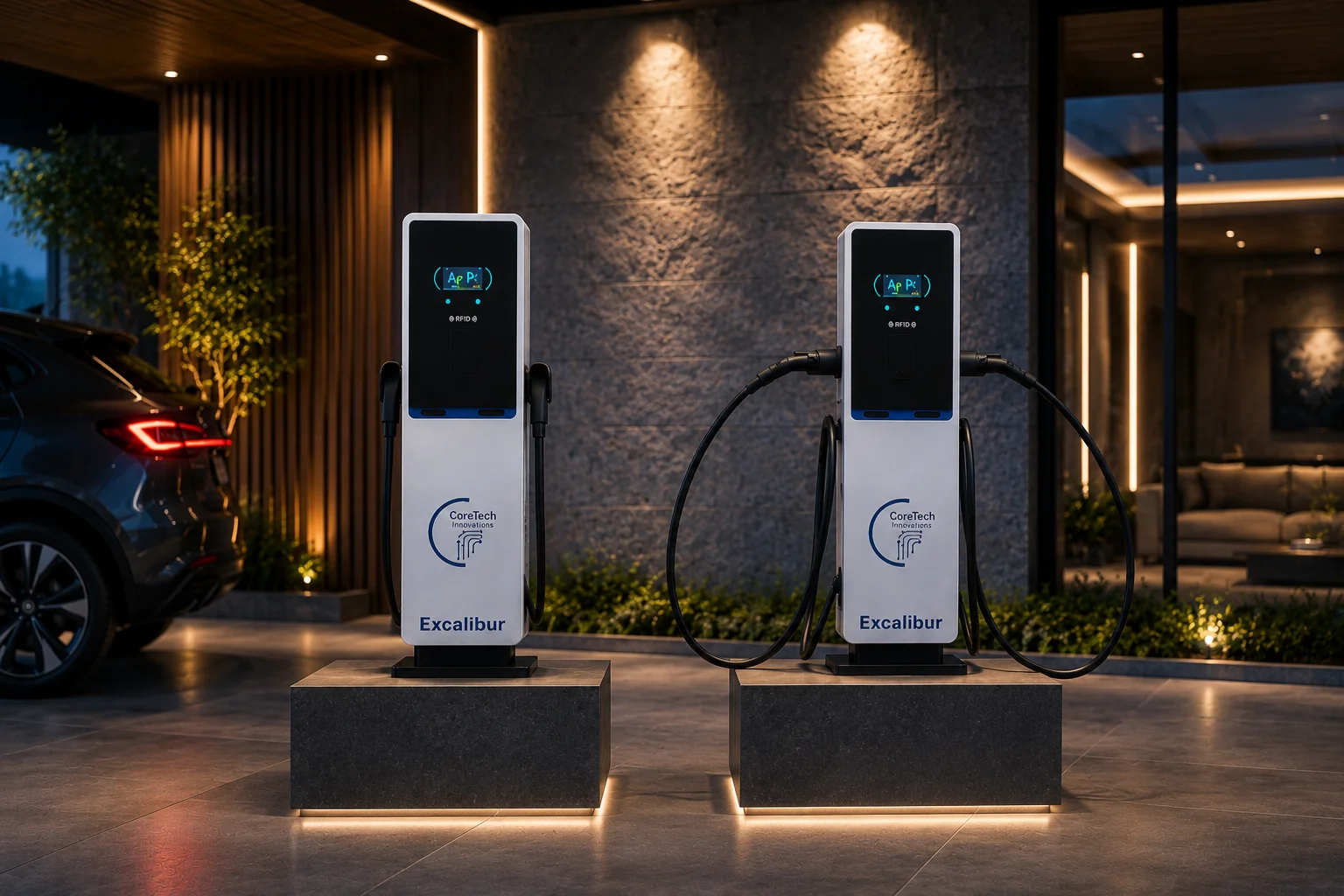
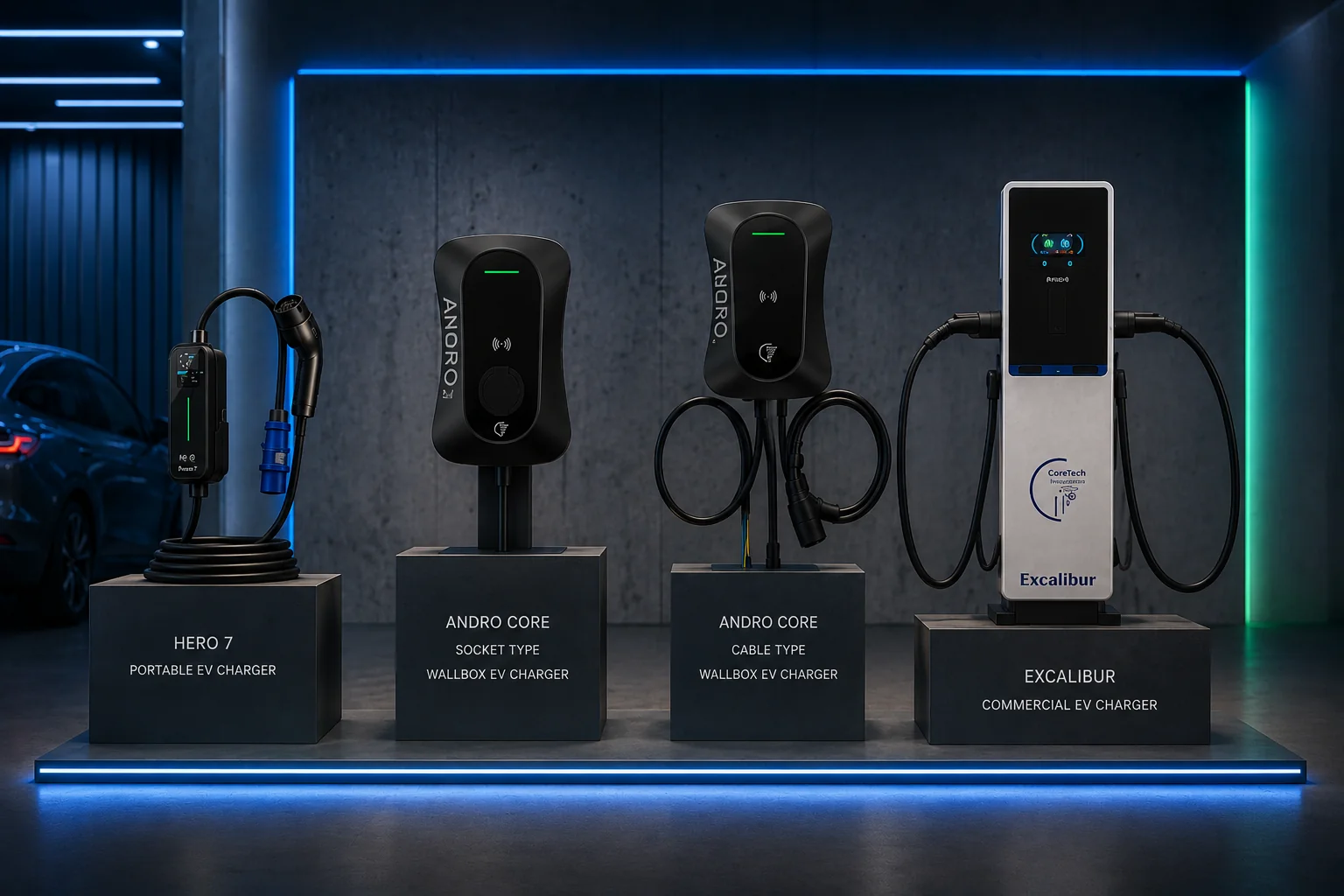
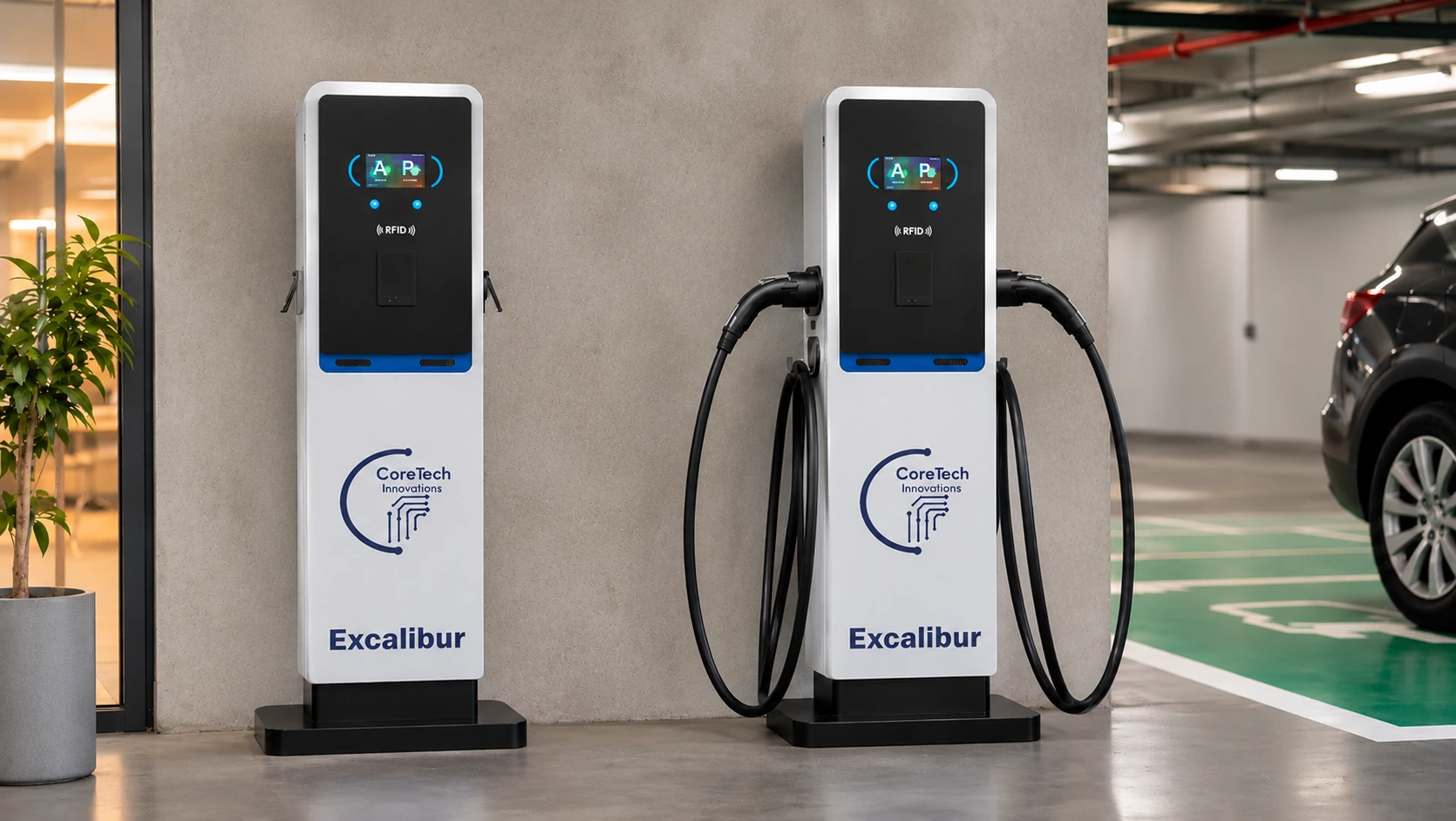
CoreTech Excalibur Commercial Three-Phase Charging
CoreTech offers commercial EV charging equipment through its Excalibur range. The supplied article identifies the Excalibur Socket Type as a dual 22kW AC charging option.
Before specifying a particular unit, confirm current product documentation, whether the rated outputs are available simultaneously, the total site supply required, supported features and installation conditions.
A commercial charging project should begin with an electrical and operational assessment rather than selecting equipment based on power rating alone.
Three-Phase EV Charger Supply Across the UK
CoreTech Innovations is based in Cardiff, Wales, and supplies EV charging products across England, Scotland, Wales and Northern Ireland.
UK customers can compare suitable home and commercial charging products, including the Excalibur range, while checking technical compatibility and delivery details.
Installation, site surveys, commissioning and support coverage should be confirmed separately for the project location; UK-wide product supply does not imply nationwide installation service.
Frequently Asked Questions About Three-Phase EV Chargers
Is an 11kW EV charger three-phase? Most 11kW AC charging points use a suitable three-phase electrical connection, but the exact equipment specification should be checked.
Can every EV charge at 22kW AC? No. Many vehicles have lower-rated onboard AC chargers, so actual power can be less than the charge point rating.
Can I install a three-phase charger at home? Potentially, if the property has or can obtain a suitable supply and a competent installer confirms that the installation is feasible.
Is three-phase charging the same as rapid DC charging? No. Three-phase 11kW and 22kW charging is generally AC charging; DC rapid charging uses different equipment.
Does a 22kW charger always cost more to run than a 7kW charger? Electricity cost depends mainly on energy consumed and tariff; higher power can change demand and infrastructure costs but does not automatically mean more energy is used for the same charge.
Does CoreTech deliver three-phase chargers throughout the UK? CoreTech supplies EV charging products throughout the UK; check current product availability and confirm installation coverage separately.