EV Charger Energy Monitoring: How to Track Your Home Charging Usage

- EV charger energy monitoring can give homeowners a clearer view of how much electricity is being used during home charging.
- Charging data can help drivers understand their normal charging habits rather than relying only on estimates based on battery size.
- Energy monitoring and Dynamic Load Balancing are different features: monitoring provides information about charging usage, while load balancing manages charging power in relation to household electricity demand.
- Charge scheduling and energy monitoring can work together to give drivers greater control and visibility over home charging.
- CoreTech's Andro Core, Andro Max and Andro Vision home chargers provide energy consumption reporting.
- Energy monitoring is useful for understanding charging activity, but it should not automatically be treated as an exact calculation of electricity costs or household energy savings.
Learn how EV charger energy monitoring can help Cardiff homeowners understand charging usage, review charging habits and manage home EV charging more effectively.
EV Charger Energy Monitoring: How to Track Your Home Charging Usage
Charging an electric vehicle at home can quickly become part of an everyday routine. You arrive home, connect the car and leave it to charge until it is needed again.
But after several weeks or months, you may start to wonder:
How much electricity is my EV actually using when I charge it at home?
This is where EV charger energy monitoring can be useful.
Rather than treating home charging as something that simply happens in the background, energy monitoring can provide greater visibility over charging activity and help drivers understand how their EV charging fits into their wider household electricity use.
For Cardiff homeowners considering a smart home charger, understanding what energy monitoring does — and what it does not do — can make it easier to decide whether the feature will be useful in everyday life.
What Is EV Charger Energy Monitoring?
EV charger energy monitoring is a feature that provides information about the electricity used during vehicle charging.
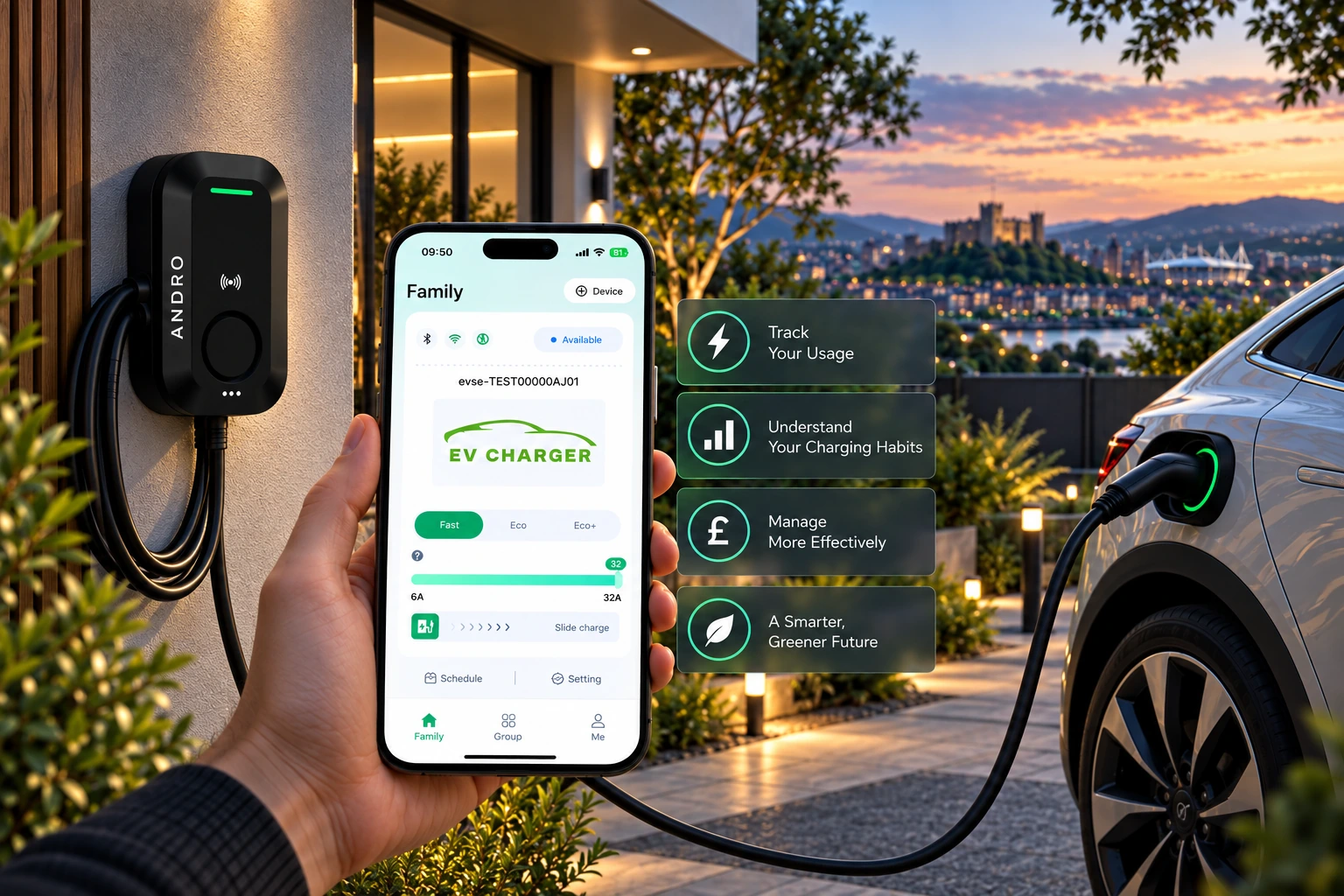
Depending on the charger and its available functions, this can help the user review information relating to charging activity, such as energy consumption and charging time.
Instead of simply knowing that the vehicle was connected overnight, the homeowner can gain a clearer picture of what happened during the charging session.
Over time, this can make it easier to understand normal charging patterns.
For example, a driver may begin to see whether they usually carry out several smaller charging sessions during the week or rely on fewer, longer sessions.
The purpose is primarily visibility: giving the user more information about how the charger is being used.
Why Track Your Home EV Charging Usage?
An electric vehicle becomes another significant electrical load within the home, so understanding its charging activity can be useful for several reasons.
The most obvious is simply knowing how much energy is being used for EV charging.
Without charging information, it can be difficult to separate vehicle charging from the rest of the household's electricity use. A household electricity bill reflects many different demands, from lighting and appliances to heating systems and EV charging.
Energy monitoring can provide a more focused view of the charging side of that picture.
It can also help drivers understand their habits. Rather than estimating usage based only on how often the car is plugged in, charging information can show how charging activity changes over time.
For many homeowners, this greater visibility is the main benefit.
What Can Charging Data Tell You?
Charging data becomes most useful when it is viewed over time rather than as a single isolated figure.
A homeowner may use it to understand questions such as:
- How regularly is the EV being charged at home? - How much energy is typically used during charging? - Are charging sessions usually short or relatively long? - Does charging behaviour change from week to week? - How does the vehicle's charging routine fit into normal household energy use?
The aim is not necessarily to analyse every charging session in detail.
For many drivers, simply having access to this information can make home charging easier to understand and manage.
Is Energy Monitoring the Same as Your Electricity Meter?
No. The two serve different purposes.
Your household electricity meter measures electricity use for the property as a whole. EV charger energy monitoring focuses more specifically on charging activity associated with the vehicle.
This distinction is important because the EV is only one part of household electricity demand.
Appliances, lighting, heating equipment and other electrical systems may all be operating at the same time.
Energy reporting from the charger can therefore provide a more focused view of EV charging, while the household meter provides the broader picture of electricity consumption across the property.
The two types of information should not automatically be treated as interchangeable.
Can Energy Monitoring Tell You Exactly How Much EV Charging Costs?
Energy consumption information can help you understand how much electricity has been associated with charging, but translating that directly into an exact financial cost requires additional information.
Electricity tariffs can vary, and some households may have different rates depending on the time electricity is used. Tariff structures and other billing arrangements can also change.
For this reason, it is better to separate two questions:
How much energy did the EV charger use?
and
What did that electricity cost under my particular tariff?
Energy monitoring can help answer the first question. Calculating the second may require the relevant electricity tariff and billing information.
This distinction also helps avoid assuming that every charging session has the same cost.
How Can Energy Monitoring Help You Understand Charging Habits?
One useful aspect of energy monitoring is that it can turn an everyday routine into something easier to observe.
Consider two EV drivers.
One may connect the car regularly and add relatively small amounts of energy after everyday journeys. Another may drive further between charges and carry out larger charging sessions less frequently.
Both drivers use home charging, but their charging patterns are different.
By reviewing charging information over time, homeowners can gain a better understanding of their own routine rather than relying on general assumptions about how EVs are typically charged.
This can be particularly useful when household circumstances or driving habits change.
Energy Monitoring and Charge Scheduling
Energy monitoring and charge scheduling perform different functions, but they can complement each other.
Energy monitoring helps you understand charging activity.
Charge scheduling allows you to plan when charging takes place.
For example, a homeowner may set a regular charging schedule and then use available charging information to review how that routine is working in practice.
This does not mean that monitoring automatically chooses the best charging time. Instead, it provides information that can help the user better understand the charging routine they have chosen.
CoreTech's Andro Core, Andro Max and Andro Vision all provide charge scheduling alongside energy consumption reporting.
Energy Monitoring vs Dynamic Load Balancing
Energy monitoring should not be confused with Dynamic Load Balancing (DLB).
Although both relate to electricity use, they perform different jobs.
Energy monitoring provides information about charging activity and energy consumption.
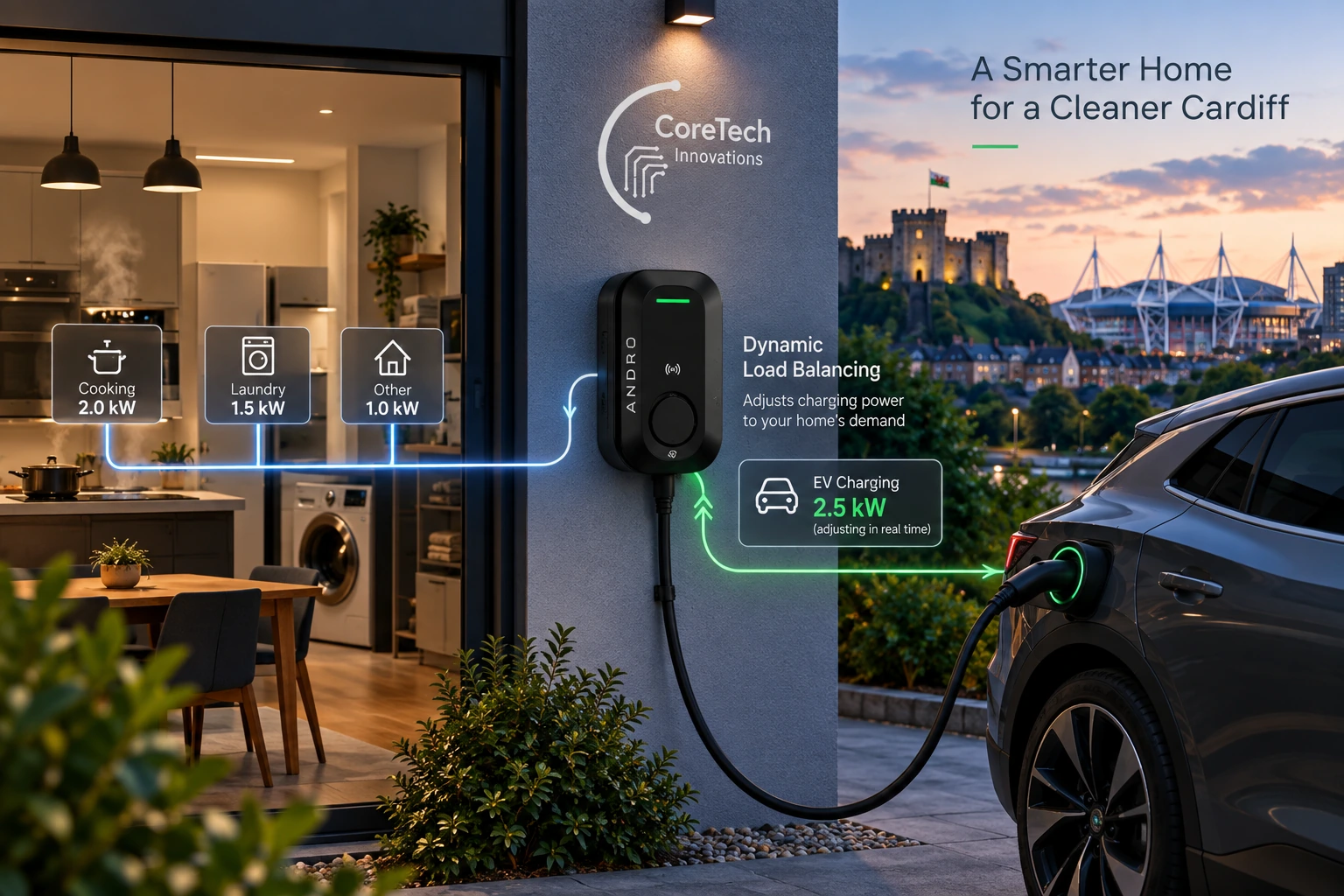
Dynamic Load Balancing adjusts EV charging power in response to changing electricity demand within the home.
For example, if household electricity demand changes while the vehicle is charging, DLB is concerned with managing the charging power accordingly.
Energy monitoring, by comparison, is concerned with providing visibility over the charging activity.
Andro Max and Andro Vision include Dynamic Load Balancing as well as energy consumption reporting, while Andro Core provides energy reporting without DLB being listed among its current features.
Keeping these functions separate makes it easier to understand what each smart charging feature is designed to do.
How Is Energy Monitoring Different from Solar Integration?
Solar PV Integration is another feature that can sometimes be discussed alongside home energy management, but it is also different from energy monitoring.
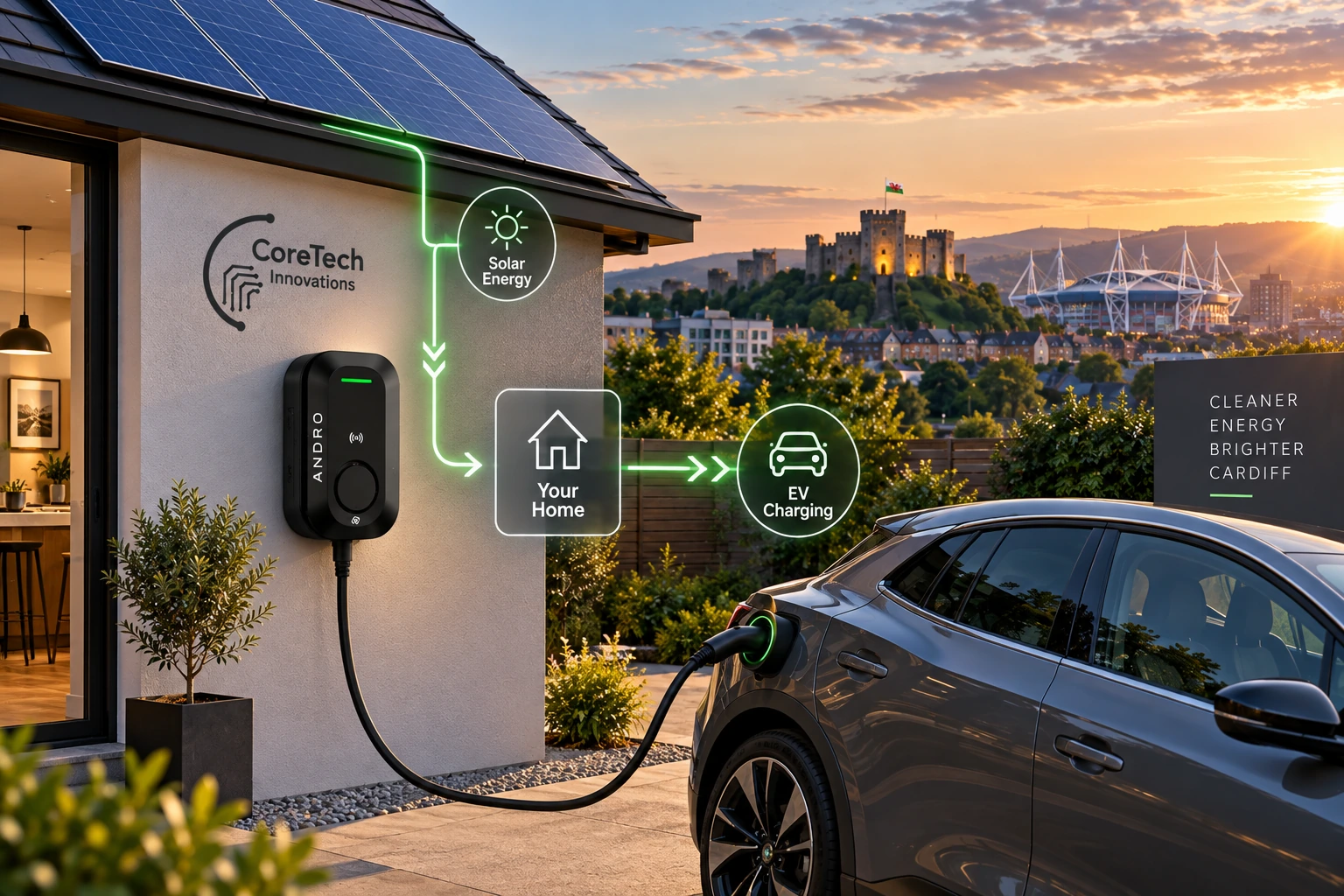
Solar Integration relates to using solar-generated electricity as part of EV charging.
Energy Monitoring relates to viewing information about charging usage.
A homeowner with solar panels may value both capabilities, but one does not replace the other.
Within CoreTech's home charging range, Andro Max and Andro Vision support Solar Panel Integration alongside energy consumption reporting.
This means homeowners should consider these features individually according to what they actually want from their charging setup, rather than treating all smart energy functions as the same thing.
Which CoreTech Home Chargers Provide Energy Consumption Reporting?
Energy consumption reporting is available across CoreTech's three Andro home wallboxes: Andro Core, Andro Max and Andro Vision*.
All three are 7kW Type 2 home chargers and provide:
- Charge scheduling; - Energy consumption reporting; - Remote software updates; - Socket and cable configurations.
The differences become more relevant when additional smart energy features are required.
Andro Core provides the core charging, scheduling and energy-reporting functions.
Andro Max adds features including Wi-Fi and Bluetooth connectivity, mobile app control, Dynamic Load Balancing and Solar Panel Integration.
Andro Vision also provides connected smart charging, Dynamic Load Balancing and Solar PV Integration, alongside its other design and installation features.
For a homeowner interested primarily in monitoring charging usage, the important point is that energy consumption reporting is not limited to the higher-featured models.
Do You Need to Check Your Charging Data Every Day?
Probably not.
For most households, the value of energy monitoring is not in constantly watching the charger.
It is more useful as a way to review charging behaviour when needed.
For example, you might look at your charging information when:
- your driving routine changes; - you want to understand how much charging is taking place at home; - you begin using a different charging schedule; - household electricity use changes; - you simply want a clearer picture of your normal EV charging pattern.
Smart charging features should make home charging easier to understand and manage, rather than creating another task that needs daily attention.
Is Energy Monitoring Worth Having on a Home EV Charger?
That depends on how much visibility you want over home charging.
A driver who simply wants to connect the vehicle and charge it may not regularly use detailed charging information.
For another homeowner, being able to review energy consumption and charging time may be valuable, particularly if they want to understand how the EV fits into the household's wider electricity use.
Energy monitoring can be especially useful for people who prefer to make decisions based on their own charging behaviour rather than estimates or general assumptions.
It does not need to be the deciding factor when choosing a charger, but it can be a practical feature to have available.
Choosing an EV Charger with Energy Monitoring in Cardiff
When comparing home EV chargers, it can be tempting to focus on the number of smart features each model offers.
A better approach is to consider which features will actually be useful in your household.
If you want greater visibility over how much electricity is being used for vehicle charging, energy consumption reporting is worth considering.
If you also want charging power to respond to household electricity demand, Dynamic Load Balancing becomes a separate consideration.
If your home has solar PV or solar forms part of your future plans, Solar Integration may also be relevant.
Looking at these functions individually can make it easier to choose a charger without paying attention to features that may have little practical value for your particular home.
Understanding Your Home Charging Usage
EV charger energy monitoring does not change the basic purpose of home charging, but it can make the process more transparent.
Instead of simply plugging the vehicle in and knowing that electricity has been used, homeowners can gain a clearer view of charging activity and how their routine develops over time.
For Cardiff EV drivers, this can be particularly useful when trying to understand how vehicle charging fits alongside the rest of the household's electricity use.
CoreTech's Andro Core, Andro Max and Andro Vision all provide energy consumption reporting alongside 7kW Type 2 home charging, with additional smart energy-management features available on Andro Max and Andro Vision.
Ultimately, the most useful question is not simply:
“Does this EV charger have energy monitoring?”
but:
“Will the charging information it provides help me understand and manage the way I charge my EV at home?”
For homeowners who value that visibility, energy monitoring can be a useful part of a practical home charging setup.