Solar EV Charging in Cardiff: Can You Charge Your Electric Car with Solar Panels?

- Electricity generated by solar panels can be used as part of a suitable home EV charging setup.
- How much solar energy can contribute to charging depends on factors such as solar generation, household electricity use and when the vehicle is plugged in.
- Solar EV charging does not necessarily mean an electric car will always charge entirely from solar power.
- CoreTech's Andro Max and Andro Vision 7kW wallbox chargers include Solar Panel Integration (PV).
- Both models also offer features including Dynamic Load Balancing, charge scheduling, energy consumption reporting and app connectivity.
- Whether solar EV charging is worthwhile for a particular Cardiff home depends on the property, energy use and normal charging routine.
Learn how solar EV charging works, how solar-generated electricity can contribute to home EV charging and what Cardiff homeowners should consider when choosing a solar-compatible charger.
Solar EV Charging in Cardiff: Can You Charge Your Electric Car with Solar Panels?
For many electric vehicle owners, charging at home is one of the most convenient ways to keep a car ready for everyday journeys. But for Cardiff households that already have solar panels, or are considering installing them, another question naturally arises:
Can you use solar energy to charge your electric car at home?
Yes. With a suitable system and charging equipment, electricity generated by solar PV can contribute to the energy used to charge an electric vehicle.
However, how much solar electricity can actually be used will vary from one home to another. Solar generation, household electricity demand and the time the vehicle is connected can all make a difference.
Understanding these factors can help Cardiff homeowners decide whether a solar-compatible EV charger is a useful addition to their home energy setup.
What Is Solar EV Charging?
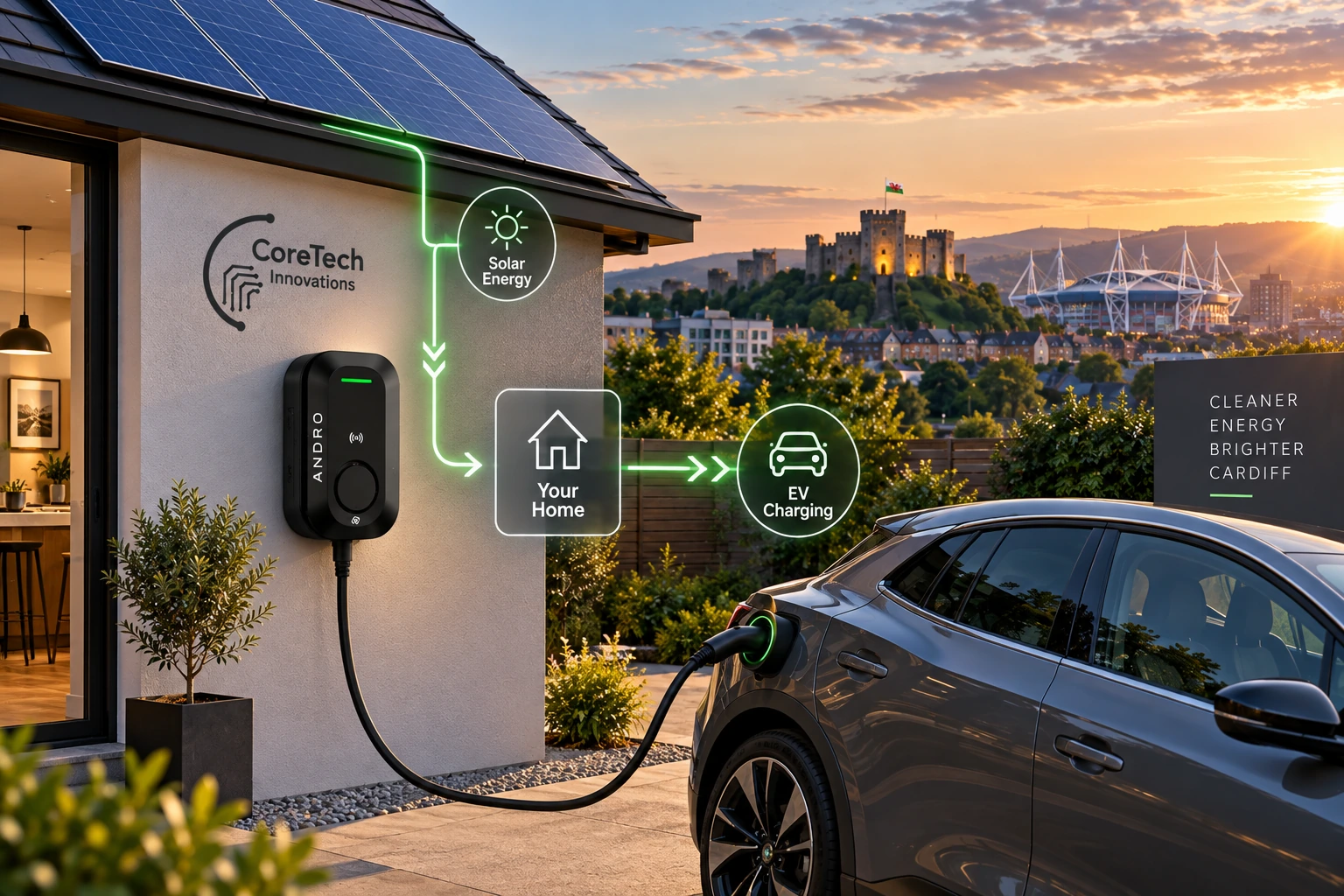
Solar EV charging means using electricity generated by photovoltaic solar panels, commonly known as solar PV, as part of the energy used to charge an electric vehicle.
In a suitable setup, solar-generated electricity can be used across the home, with EV charging forming one part of that overall electricity demand.
At a simple level, the relationship can be viewed as:
Solar generation → Household electricity use → EV charging
When the vehicle is connected and the charging setup supports solar integration, available solar-generated electricity can contribute towards charging the EV.
Exactly how this works will depend on the solar system, charging equipment and electrical setup at the individual property.
Can You Charge an EV Entirely with Solar Power?
Solar energy can make a useful contribution to EV charging, but it should not be assumed that every charging session will be powered entirely by solar electricity.
Solar generation varies throughout the day and under different conditions. At the same time, other appliances and systems within the home may also be using electricity.
The availability of the vehicle matters too. If an EV is at home and connected while solar electricity is being generated, there may be more opportunity to use that energy directly for charging.
It is therefore more practical to think of solar PV as one potential source of energy for home EV charging, rather than assuming it will provide all the electricity a vehicle needs at all times.
Is Solar EV Charging Practical in Cardiff?
Solar EV charging is not limited to places associated with year-round sunshine. What matters is how much electricity a property's solar PV system generates and how that generation fits with household demand and the owner's normal charging routine.
For a Cardiff homeowner, rather than simply asking:
“Can solar panels charge my EV?”
a more useful question is:
“How much could the electricity generated by my solar system contribute to the way I normally charge my EV?”
The answer will differ between properties, which is why solar EV charging is best considered in the context of the individual home.
Why Does Charging Time Matter?
One of the main considerations is whether the vehicle is at home when solar electricity is being generated.
For example, a car that is away from home for most of the day may have less opportunity to use solar electricity directly. A vehicle that is regularly parked at home during periods of solar generation could have a different charging pattern.
Other electricity use within the home also needs to be considered, as household appliances and systems may be using some of the available solar-generated electricity at the same time.
It can therefore be useful to consider three factors together:
Solar generation + Household electricity demand + EV charging time
Looking at these together gives a more realistic picture of how useful solar integration could be for a particular home.
Which CoreTech EV Chargers Support Solar PV Integration?
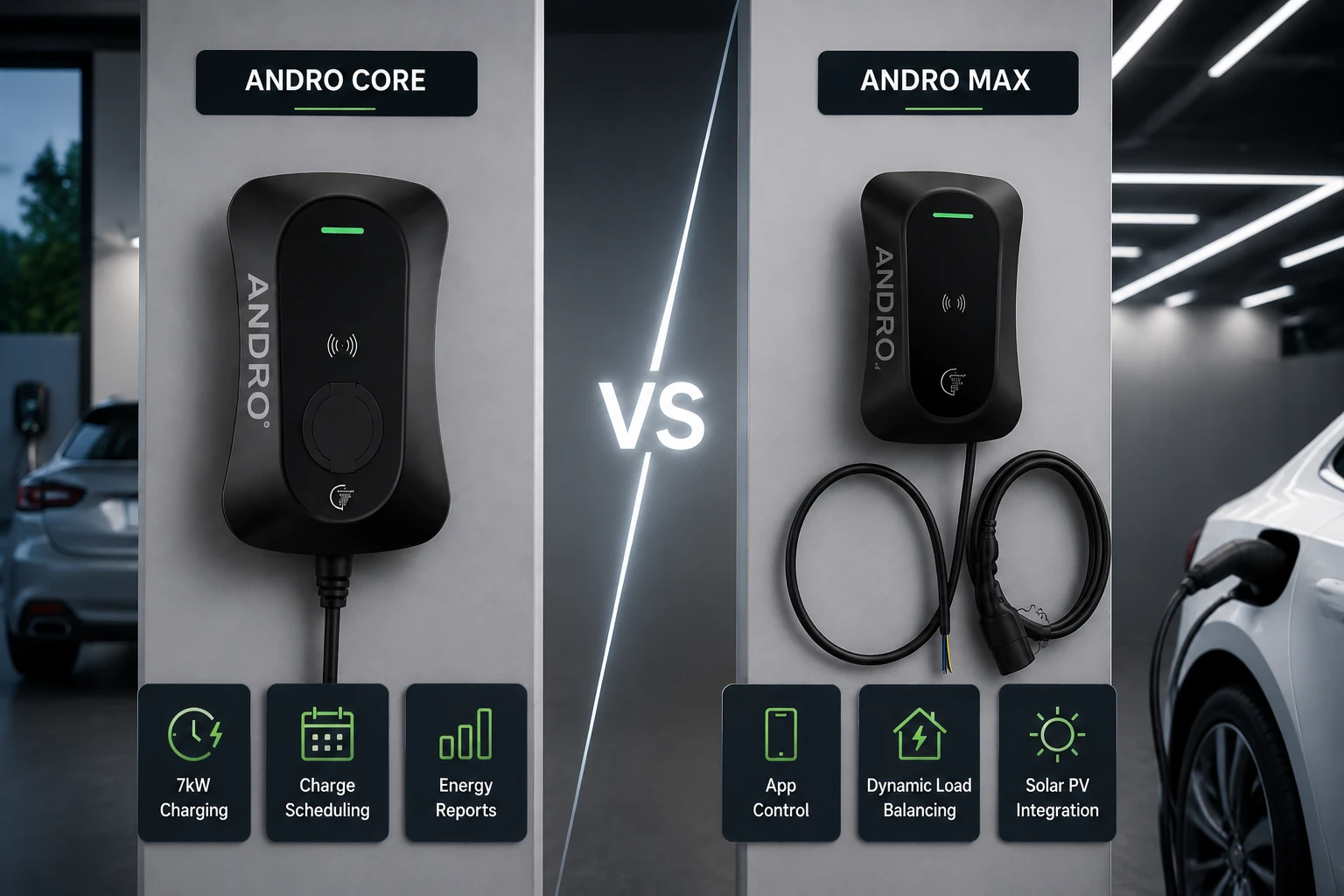
Within CoreTech's home charging range, Andro Max and Andro Vision support Solar Panel Integration (PV), allowing solar energy to be used as part of vehicle charging.
Both are 7kW Type 2 wallbox chargers and combine solar integration with other smart charging features, including Wi-Fi and Bluetooth connectivity, mobile app control, charge scheduling, energy consumption reporting, Dynamic Load Balancing and remote software updates.
Andro Max is available in socket and cable versions. Andro Vision also offers socket and cable options, with flexible wall or floor mounting.
For homeowners who consider solar integration an important part of their charging setup, Andro Max and Andro Vision are the relevant options within CoreTech's current home wallbox range.
What About Andro Core?
Andro Core is also a 7kW Type 2 home wallbox and includes features such as charge scheduling, energy consumption reporting and remote software updates.
However, Solar Panel Integration is not listed among the current features of Andro Core.
This distinction may be relevant when choosing between chargers, but it does not mean that every homeowner needs a solar-compatible model.
For a property without solar PV, particularly where solar is not part of future plans, other charging features may be more important.
How Is Solar Integration Different from Dynamic Load Balancing?
Solar Integration and Dynamic Load Balancing are both related to energy management, but they serve different purposes.
Solar PV Integration relates to using electricity generated by solar panels for vehicle charging.
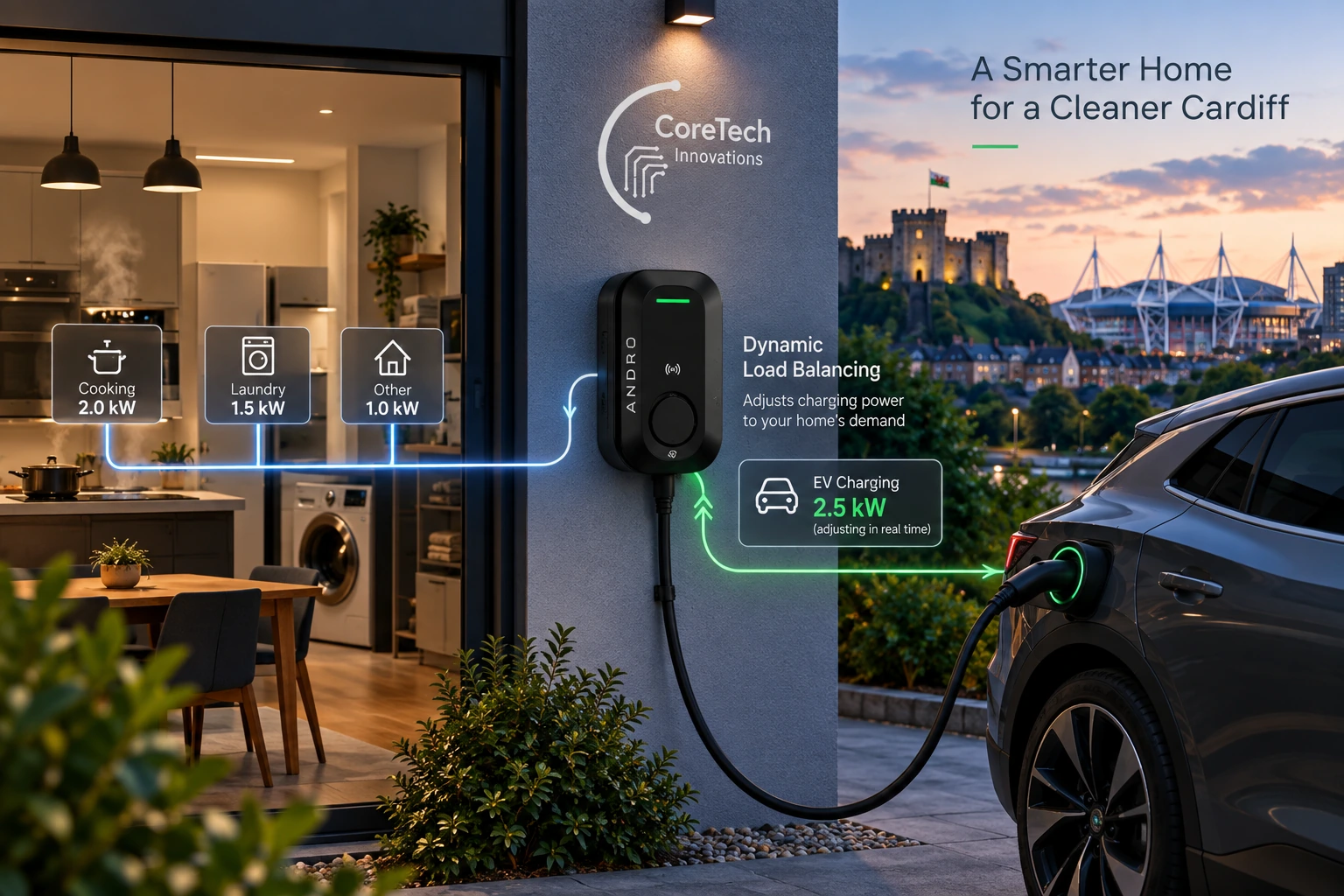
Dynamic Load Balancing (DLB) adjusts EV charging power according to the electricity demand within the property.
Andro Max and Andro Vision include both features.
They should therefore not be treated as the same function. Solar integration concerns the use of solar-generated electricity, while DLB manages charging in response to changing household electricity demand.
What Role Do Charge Scheduling and Energy Monitoring Play?
Other smart features can also help homeowners manage EV charging.
Charge Scheduling allows the driver to plan when charging takes place, while Energy Consumption Reporting provides information about factors such as energy used and charging time.
Andro Max and Andro Vision include both functions.
These features do not replace solar integration, but they can provide greater visibility and control over how an EV is charged at home.
Will Solar Panels Make EV Charging Free?
Having solar PV does not automatically mean that every EV charging session will be free.
The amount of solar-generated electricity available for the vehicle depends on how much electricity is being generated, what the household is using at the same time and when the vehicle is charging.
There may be times when solar energy makes a greater contribution to a charging session and others when additional electricity is needed from elsewhere in the home's energy supply.
Solar EV charging is therefore better understood as a way to make use of available solar-generated electricity for vehicle charging, rather than a guarantee of permanently free charging.
Do You Need a Home Battery for Solar EV Charging?
A home battery and a solar-compatible EV charger perform different roles within a home energy system.
Solar EV charging can involve using solar electricity while it is being generated, whereas battery storage adds the ability to store energy for later use.
A home battery should not therefore be considered a general requirement for solar EV charging.
Where battery storage is already installed or being considered, compatibility between the EV charger, solar PV system, battery and wider electrical setup should be assessed for the particular property.
Is Solar EV Charging Right for Your Home?
Before choosing a solar-compatible EV charger, Cardiff homeowners may find it useful to consider a few practical questions:
- Does the property already have solar PV, or is solar planned for the future? - Is the vehicle normally at home when solar electricity is available? - How is electricity typically used across the household? - Is solar integration genuinely important to the way the EV will be charged? - Which other smart charging features would be useful? - Is the property's electrical setup suitable for the proposed charging system?
For some Cardiff homes, solar integration could be a useful part of an EV charging setup. For others, a simpler charging arrangement may be better suited to everyday requirements.
Should You Consider Solar EV Charging for Your Cardiff Home?
Solar EV charging can be a practical option for households that already have solar PV or are considering it as part of their future home energy plans.
However, the real value of solar integration depends on the individual property. Solar generation, household electricity use, vehicle availability and charging habits all influence how useful the feature may be in practice.
Within CoreTech's home charging range, Andro Max and Andro Vision provide 7kW Type 2 charging alongside Solar PV Integration and other smart energy-management features.
Ultimately, the important question is not simply whether an electric car can be charged using solar panels.
It is:
“How well does solar EV charging fit the way electricity and the vehicle are actually used in your home?”
Considering that question can help Cardiff homeowners choose a charging setup that suits their current needs while also taking future home energy plans into account.