EV Chargers for Renters in the UK: Portable vs Fixed Charging

- Renters across the UK may be able to charge at home, but parking rights, landlord permission and electrical suitability determine the options.
- A fixed wallbox generally requires written permission and a site-specific professional electrical assessment.
- Portable chargers offer flexibility but still require a compatible, suitable electrical supply; they are not safe to use with every socket.
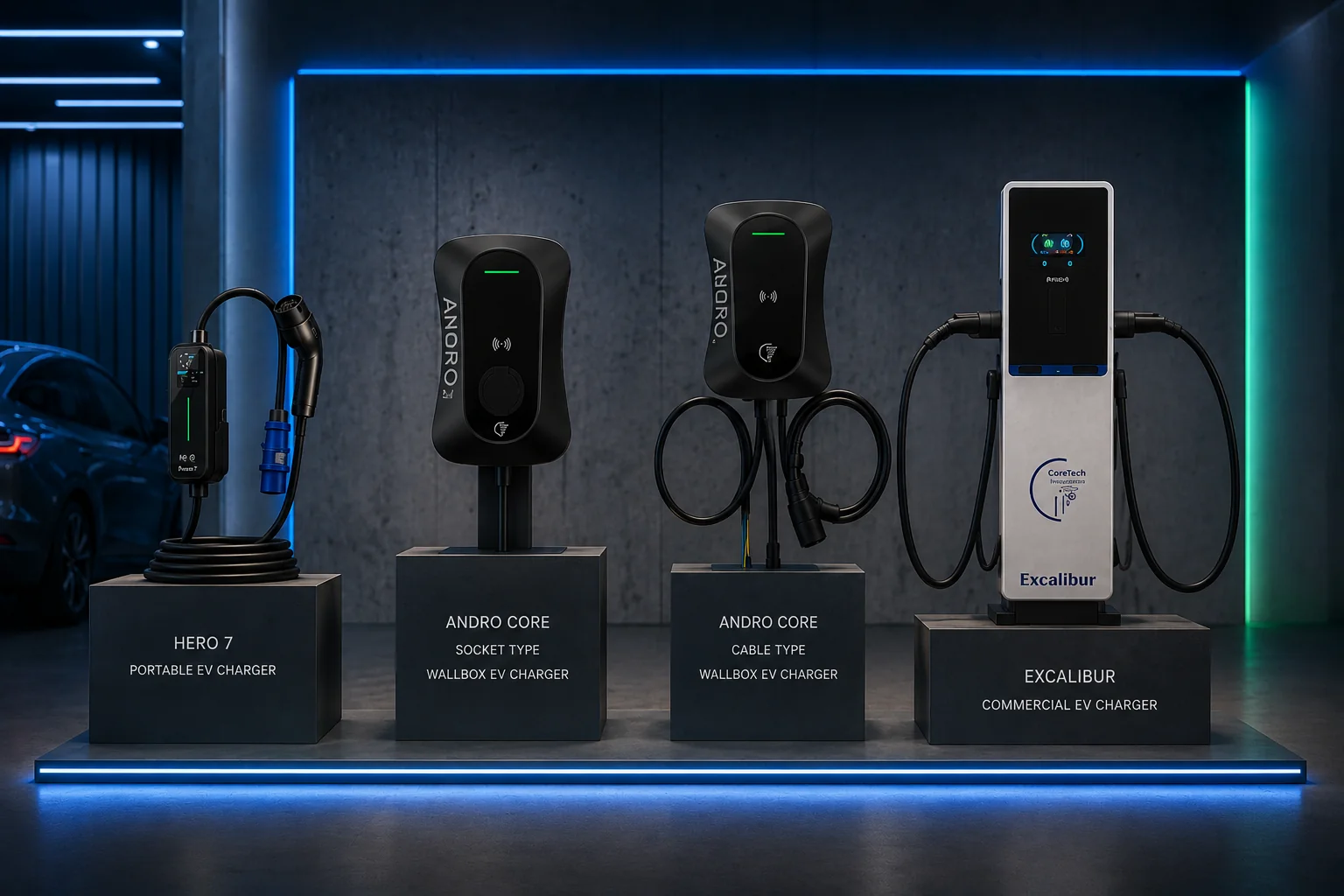
- CoreTech Hero 7 is a portable option, while the Andro range can be considered where a fixed installation is approved.
- Tenants should agree installation costs, electricity billing, ownership and move-out arrangements before committing.
- Any grant eligibility should be verified against current official guidance rather than assumed.
Can renters install an EV charger in the UK? Compare portable and fixed charging, landlord permission, parking, electrical safety and costs for tenants.
EV Charging for Renters Across the UK
Renting a home does not automatically rule out charging an electric vehicle where you live. The practical answer depends on the parking space, the electrical supply, the tenancy arrangements and whether a permanent installation is permitted. These questions matter to tenants in England, Wales, Scotland and Northern Ireland, not just those living in one city.
This guide focuses on decisions specific to renters: whether to ask for a fixed wallbox, when a portable charging solution might be suitable, what to agree with a landlord and how to avoid paying for equipment that cannot be used at the property. It is not a substitute for an electrical assessment or tenancy advice.
Can You Install an EV Charger in a Rented Property?
A fixed wall-mounted charge point generally requires physical changes to a building or its electrical installation. A tenant should obtain the appropriate written permission before arranging work, even when they have exclusive use of a driveway. The tenancy agreement and any building-management arrangements may impose additional conditions.
Permission alone does not establish technical suitability. A competent installer needs to assess the available supply, proposed charger location, cable route and relevant safety requirements. Tenants should confirm both the contractual and technical position before buying a wallbox.
Start With Your Parking Rights
Private off-street parking close to the property often makes a dedicated charge point easier to consider. A space that belongs to the tenancy is different from an unallocated bay, shared courtyard or public street, where a tenant may not control the installation area.
Check who owns the parking surface, whether the space is allocated, whether cables would cross a route used by pedestrians and whether access could change during the tenancy. Avoid planning to run charging cables across a pavement or communal walkway without an authorised, safe arrangement.
Ask Your Landlord the Right Questions
Approach the landlord or managing agent with a concise proposal covering the preferred parking position, the type of equipment, who would pay for the work and whether the charger would remain when the tenancy ends. An installer quotation or initial site assessment may make the discussion more concrete.
Get agreement in writing on installation access, maintenance, electricity costs, insurance responsibilities where relevant and what happens if you move out. Do not assume a landlord must approve a particular product or that permission from a landlord overrides permissions required from other property stakeholders.
Portable EV Charger or Fixed Wallbox?
A fixed wallbox is a dedicated charging installation that can be convenient for regular home charging. Its suitability depends on the property and approval for the work. A portable charger is not permanently wall-mounted and may be useful for tenants who move frequently, but portability does not remove the need for an appropriate power connection.
Compare the charging equipment against your actual parking and electrical arrangements rather than assuming portable is always easier or fixed is always faster. The vehicle, connector, supply and installation determine the charging experience. A portable unit may still need a properly specified socket or dedicated connection.
Using Portable Charging Safely
A portable charger must only be used with a compatible, suitable electrical connection and according to the manufacturer’s instructions. Ordinary domestic sockets should not automatically be treated as suitable for prolonged high-load EV charging. An electrician can assess whether the proposed connection and circuit are appropriate.
Avoid extension leads, improvised adaptors and cables exposed to avoidable damage. Check the product’s stated compatibility, protection requirements and environmental suitability before use. If the available supply is uncertain, resolve that question before purchasing or connecting equipment.
Where the CoreTech Hero 7 May Fit
CoreTech’s Hero 7 is a portable EV charging option that renters can consider when a non-permanent charging format fits their circumstances. It may appeal to drivers who expect to change properties, provided they can access a suitable electrical supply at each location.
A portable format should not be confused with universal socket compatibility. Confirm the current Hero 7 specification, connector requirements and suitable supply arrangements directly from the product information. Compare the actual available connection at the rented property before deciding whether the unit will be useful.
When an Andro Wallbox Makes More Sense
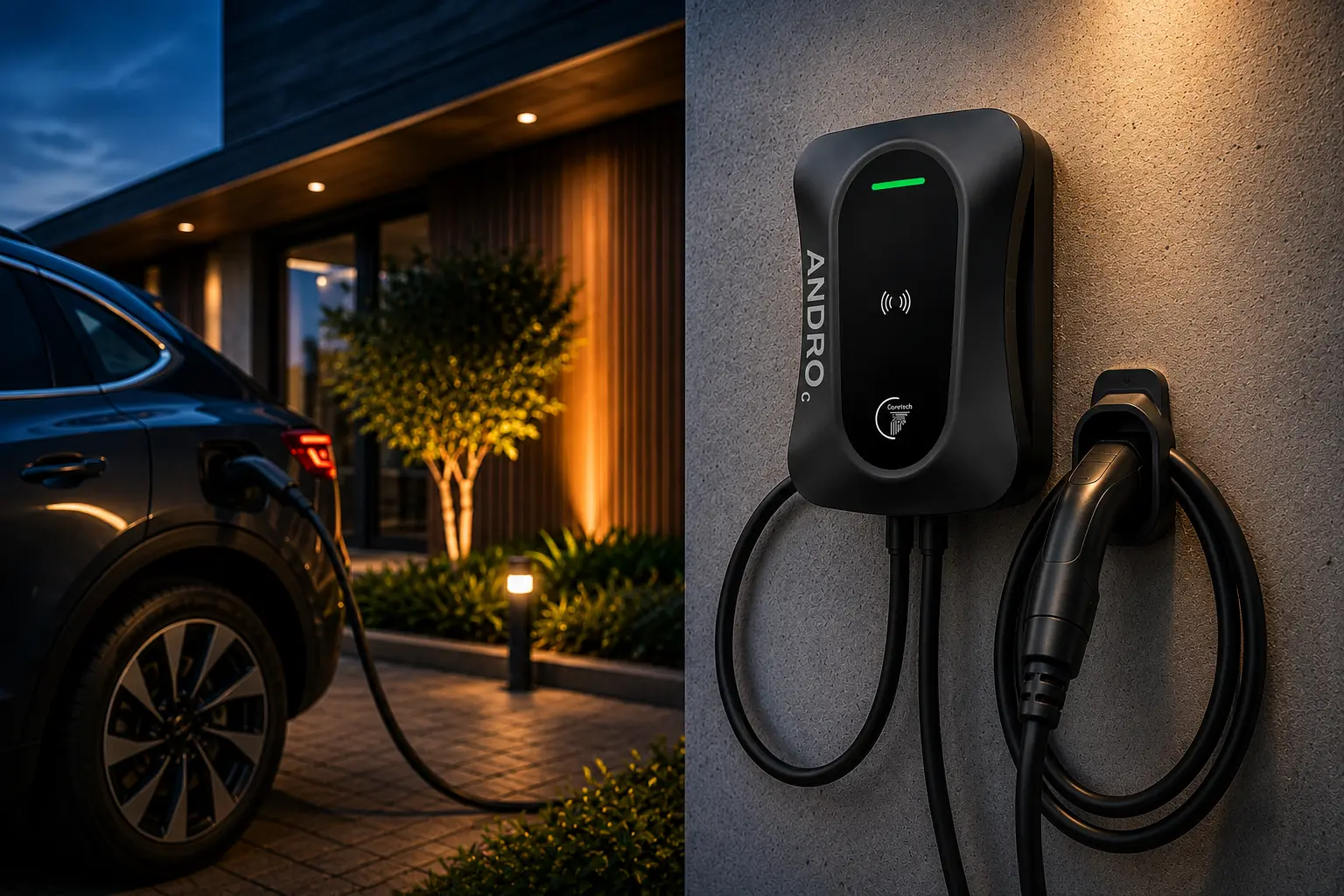
Where a tenant has a suitable private parking space, landlord permission and an approved installation plan, a fixed home wallbox from CoreTech’s Andro range may be worth considering. A dedicated charging point can suit drivers who charge regularly at the same address and want a consistent routine.
Before committing, check the total installed cost, available electrical capacity and any features you genuinely need, such as scheduling. Also agree who owns the installed charger and whether it stays with the property. A long expected tenancy can make this conversation different from a short rental arrangement.
Flats, Shared Buildings and Managed Parking
Tenants in apartment blocks often face more stakeholders than renters with a private driveway. The landlord may not control the communal car park, and permission could be needed from a freeholder, factor, management company or other authorised party depending on the building.
Cable routing, metering, allocated bays, fire-safety considerations and shared electrical capacity may need coordinated review. This article addresses the tenant’s decision and permission process; a dedicated guide to EV charging for flats can explore shared-building infrastructure in greater depth.
Who Pays for the Electricity?
Charging at home uses electricity that must be measured and paid for under an agreed arrangement. Where the charger is connected to a tenant’s own metered supply, the billing may be relatively straightforward. Shared supplies or communal parking can require a separate metering or reimbursement approach.
Ask how charging consumption will be accounted for before work begins. Smart monitoring can be useful where supported by the selected equipment, but app readings should not automatically be treated as a substitute for any formal billing or metering requirement.
Budget for More Than the Charger
A fair comparison considers the charger purchase price, electrical work, cable route, potential supply changes and any permissions or administration costs. A lower-priced device is not necessarily the lower-cost solution if the property needs substantial changes or the equipment cannot be used safely.
For a tenant, the expected length of the tenancy is an additional financial factor. Consider whether the landlord contributes, whether the installed unit will stay at the property and how many years of use you reasonably expect. Seek a site-specific quotation rather than relying on a generic installation price.
Check Current UK Support and Eligibility
Grant and support schemes can change, and eligibility may depend on the nation, property, parking and applicant circumstances. Some schemes distinguish renters, flat occupants and landlords. Never assume that every tenant or charger qualifies for financial assistance.
Before budgeting around a grant, check the latest official government guidance for the relevant UK nation and the specific scheme. Confirm application timing and installer requirements before arranging work, because retrospective claims may not be permitted under some programmes.
What Happens When You Move?
Moving home can change the value of your charging investment. A permanently installed wallbox may remain at the property under the agreement with the landlord, while a portable unit may be easier to take with you. Neither outcome should be assumed without checking the equipment and contract.
If removal of a fixed charger is contemplated, it should be agreed in advance and handled safely by a qualified professional. At a new address, a portable charger still needs a fresh check of the electrical supply and parking arrangements before use.
A Practical Decision Checklist for Tenants
First, identify exactly where the car will park and who controls that space. Second, check the tenancy and obtain written permission for any permanent works. Third, have the electrical connection assessed. Fourth, compare portable and fixed options using your driving routine and likely time at the property.
Finally, confirm the complete cost, charging compatibility, responsibility for maintenance and the arrangement when you leave. If any essential permission or safety requirement is unresolved, postpone the purchase rather than choosing a charger on features alone.
Choosing a UK EV Charger with CoreTech
CoreTech Innovations is based in Cardiff and offers EV charging products for customers across the UK. Renters can compare the portable Hero 7 with fixed Andro charging options to understand which product category may suit their property and routine.
Browse the current product range at /evchargers/ and confirm product specifications before ordering. Any installation should be planned around the individual property and undertaken by an appropriately competent professional; nationwide product availability should not be mistaken for a promise of installation at every UK address.
Frequently Asked Questions
Can a tenant install a wallbox without permission? A permanent installation should not proceed without the necessary written permissions and a suitable electrical assessment.
Is a portable charger safe in any household socket? No. The connection, circuit and product instructions must be checked; portability does not make every socket suitable.
Is Hero 7 always better than an Andro charger for renters? No. Hero 7 offers a portable format, while a fixed Andro wallbox may suit an approved long-term installation. The right choice depends on the property and charging routine.
Can tenants in flats charge at home? Sometimes, but shared parking and building-management arrangements can make permission and infrastructure planning more complex.
Will a grant cover my charger? Eligibility and availability depend on the current scheme and individual circumstances. Check official guidance before assuming support.